Updated March 26
A draft of Iowa’s 2026 impaired waters list was released for public comments in March. In our comments, we raised some concerns about how data gets ignored or misinterpreted.
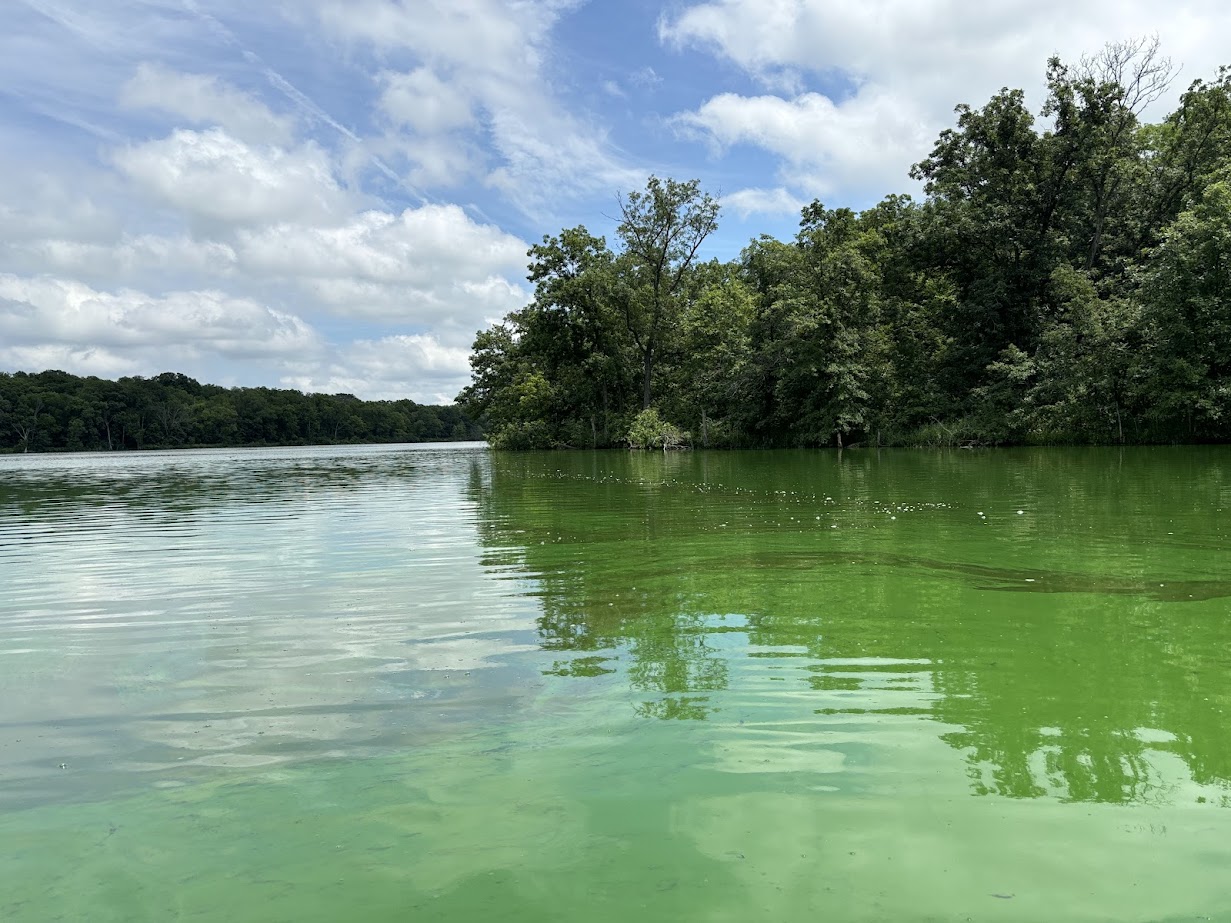
On St. Patrick’s Day, I gave a talk for the Izaak Walton League explaining why lakes and rivers turn green and how the assessment process works and why so many waters get stuck on the impaired list. Here is a recording.
Update on nitrate and drinking water
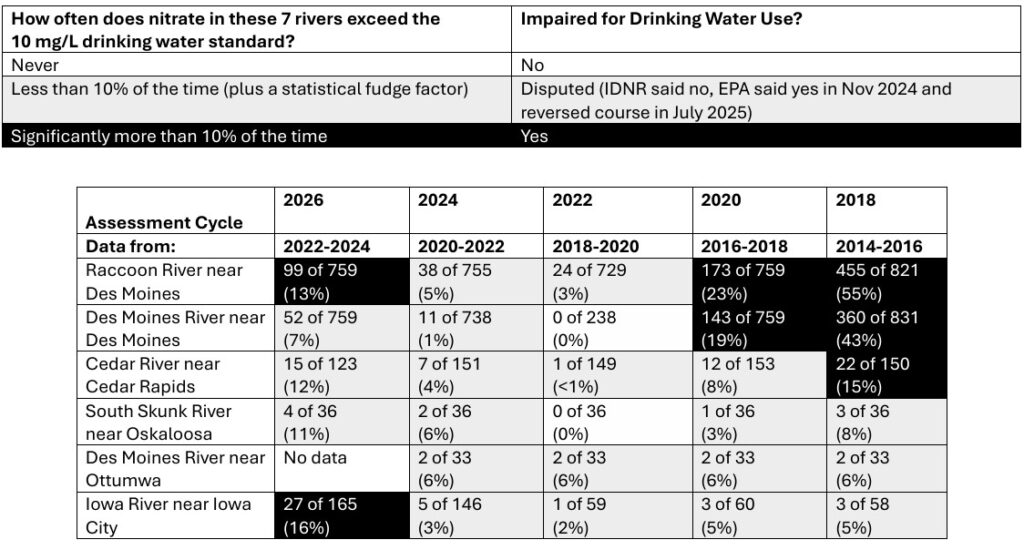
The last time the Iowa DNR submitted a list of impaired waters to the EPA, there was a dispute about six stretches of river that supply drinking water to Des Moines, Cedar Rapids, Iowa City, and Ottumwa, and used to supply water to Oskaloosa. The DNR claimed that the drinking water standard for nitrate should be evaluated using a 10% threshold, but even with this interpretation, two of the rivers failed to meet the standard this time. This chart shows what all the fuss is about.
The Goose Excuse Bill
Ioway Creek in Ames and West Indian Creek in Nevada have very high levels of E. coli, but aren’t on the impaired list because of a state law which limits how the DNR can use our data. They would have been joined on the Waters in Need of Further Investigation list by hundreds more rivers if the legislature passed House File 2530:
An Act requiring the Department of Natural Resources to identify specific animal sources of pollutants to a water of the state when determining the water’s inclusion on a list of impaired waters.
Thankfully, the bill did not make it through the second funnel. While it’s useful to know where bacteria is coming from, DNA testing is expensive and should be done after a problem has been identified.
Finding clean waters
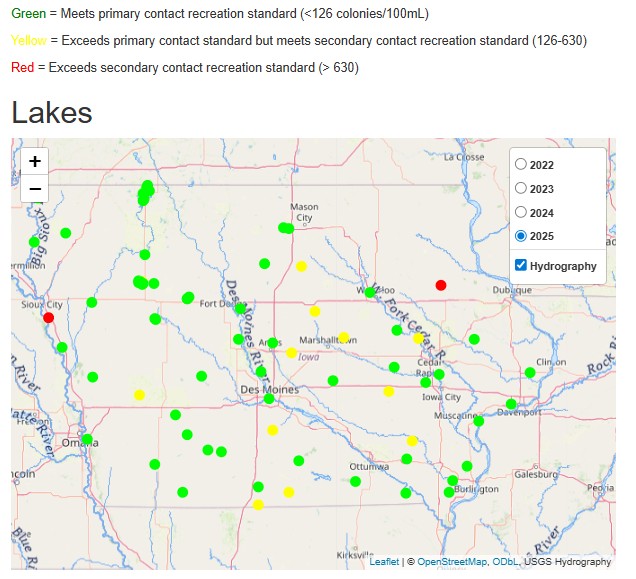
I am sometimes asked where to go in Iowa to find clean water for paddling, swimming, floating in an inner tube, or just letting the kids splash and catch crayfish in the creek. A map or list of impaired waters is not very helpful for this, because the waters that aren’t included might be clean, or they might not have been assessed. So I made an interactive map, color-coded to show which lakes and rivers met or exceeded the primary and secondary contact recreation standards, in the last four recreational seasons.
The Fine Print
If you explore the Impaired Waters List and the rest of the assessment database, you will likely run across some things that don’t make sense. I share your frustration! This pair of short videos from our “Clean Water Act: 50 Years, 50 Facts” series contrasts how Section 305(b) and 303(d) of the Clean Water Act should work in theory, and how it can go wrong in practice. However, I continue to see improvements in the assessment database (ADBNet) and water quality database (AQuIA) and want to express my appreciation to IDNR for the data they collect and their efforts to be make it available to the public.