Metrics from the 2023 monitoring season

Metrics from the 2023 monitoring season

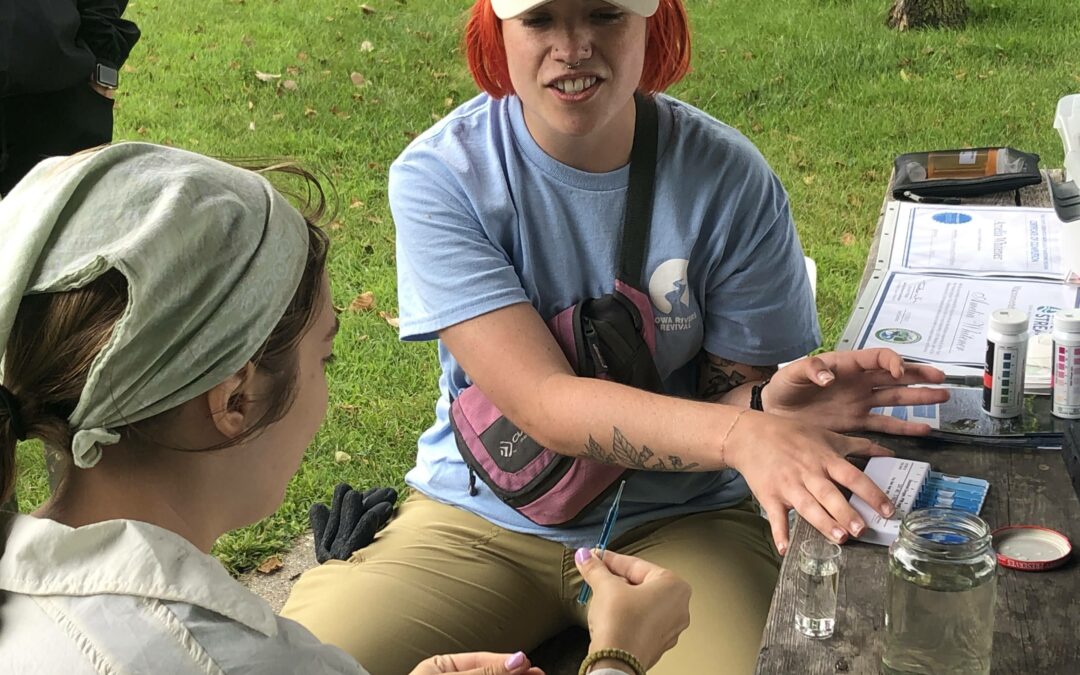
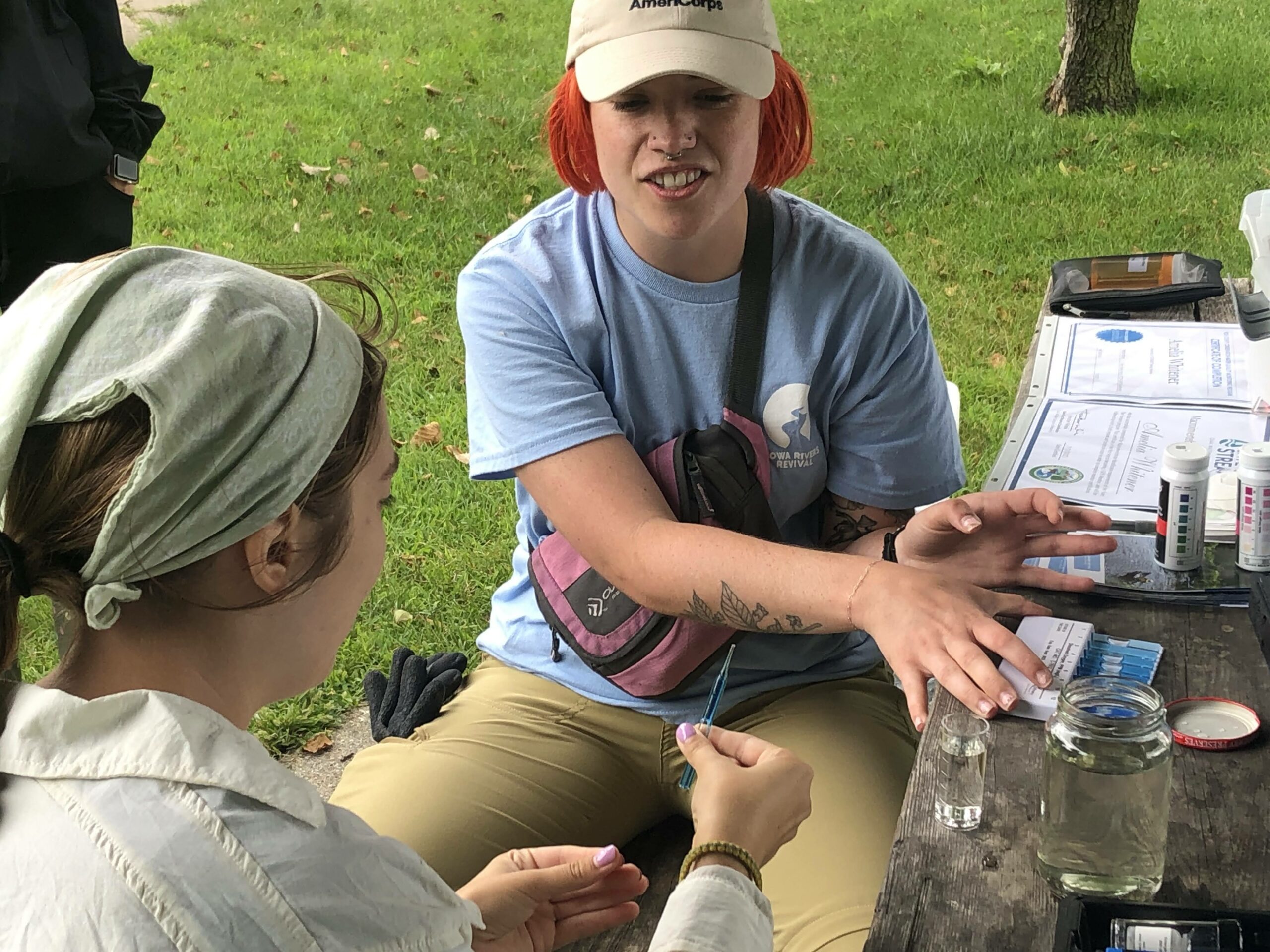
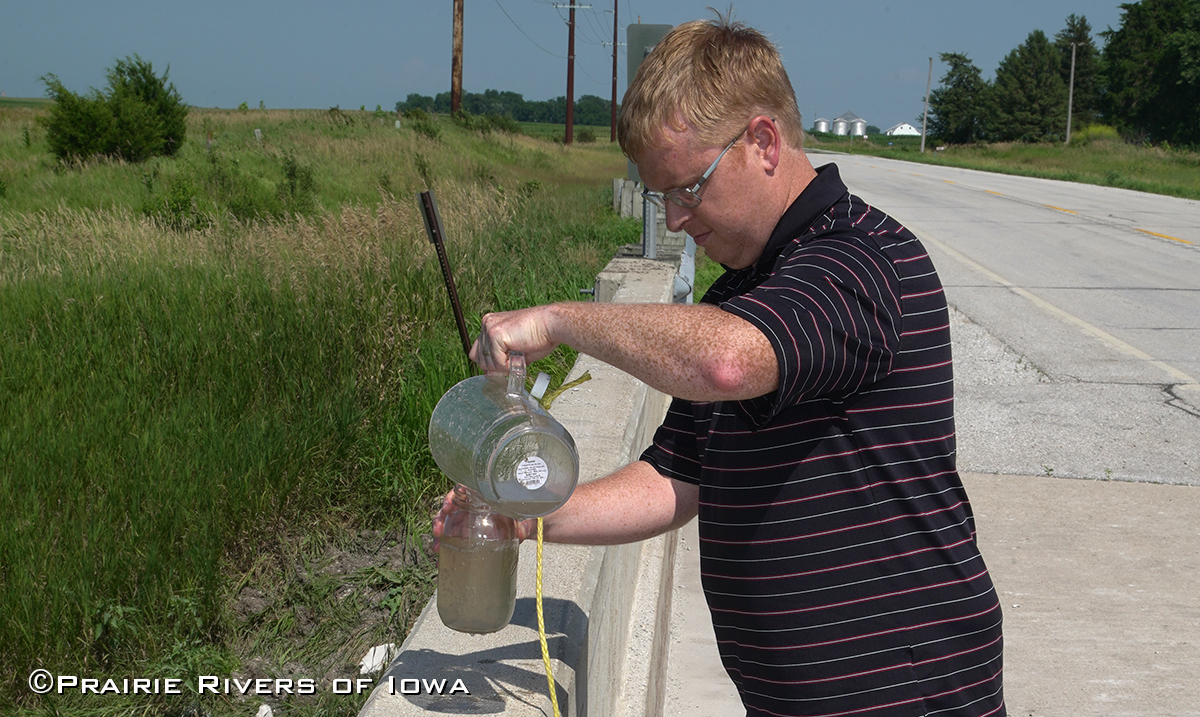
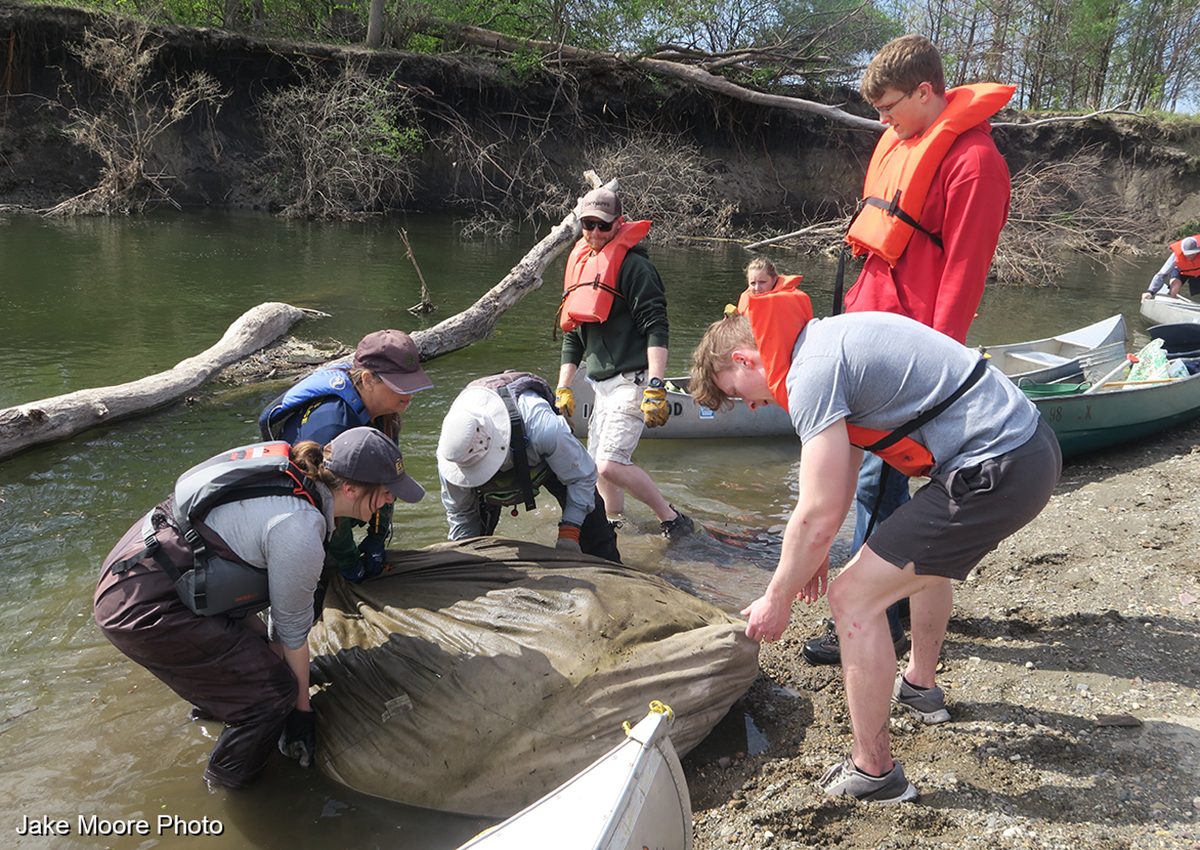
Amelia Whitener leads a water monitoring demonstration at a trash cleanup event.

Monitoring a stream once or twice a month is a big commitment, but our locally-led water monitoring program (which started in Story County but has expanded to Hamilton County) has no shortage of committed volunteers!  The following metrics show the continued growth of the program in size and consistency. 

Also, let’s give a shoutout to the people who work behind the scenes to make it happen!  Sara Carmichael of Story County Conservation keeps everyone on track and equipped with supplies.  Heather Wilson of the Izaak Walton League of America helps train volunteers and has been leading up the new Nitrate Watch initiative.  We rely on the IWLA’s  Save Our Streams program for training materials and the Clean Water Hub for data entry.  In addition to volunteer monitoring, Maryann Ryan and her team at the City of Ames Laboratory Services Division process weekly samples from 3 sites and monthly samples from 15 sites.

2022 Season

Volunteers participating

Sites tested at least once

Sites tested at least 20 times

Data sheets entered in the Clean Water Hub

2023 Season

Volunteers participating

Sites tested at least once

Sites tested at least 20 times

Data sheets entered in the Clean Water Hub

In March, Prairie Rivers will release a report detailing the findings.  Here are a few preliminary numbers that give a sense of how 2023 stacks up to the previous year.  

2022 Season

Weeks in Drought

E. coli (geomean) at best site

E. coli (geomean) at worst site

%

"Poor" readings in Clean Water Hub

2023 Season

Weeks in drought

E. coli (geomean) at best site

E. coli (geomean) at worst site

%

"Poor" readings in Clean Water Hub

Drought continues to limit where we have flowing water.  Sometimes, most of the water in a creek is coming from sewage treatment plants, which are able to remove some pollutants but not others.  E. coli bacteria (an indicator of fecal contamination) continues to be high in most waters, likely coming from multiple sources.  Looking at E. coli averages (geometric means) for the 2023 recreation season,  two swimming beaches in the county met the primary contact recreation standard (126 colonies/100mL) but only 1 of 14 streams with enough data to evaluate did, and three exceeded the secondary contact recreation standard (630 colonies/100mL).   Due to restrictive state laws about “credible data”, these sites might appear on a list of “Waters in Need of Further Investigation” but won’t be counted on the 2024 Impaired Waters List.

We continue to work with partners locally and around the state on ways to interpret water quality data and make it more accessible.

Can Infrastructure Spending Help Iowa’s Polluted Rivers?

Can Infrastructure Spending Help Iowa’s Polluted Rivers?

The display department for the plans.  If you've read Douglas Adams, you'll appreciate the joke.

“But look, you found the notice didn’t you?”
“Yes,” said Arthur, “yes I did. It was on display in the bottom of a locked filing cabinet stuck in a disused lavatory with a sign on the door saying Beware of the Leopard.”


– Douglas Adams, The Hitchhiker’s Guide to the Galaxy 

I was reminded of this scene after spending a long day cross-referencing the Raccoon River TMDL (a pollution budget for nitrate and E. coli) with permits and monitoring data for wastewater treatment plants.  In this case, I suspected that polluters were getting away with something, but I’ve had just as much trouble finding information when I wanted to document a success story.

Effluent limits for nitrogen are not strict.  Wastewater treatment plants and meatpacking plants in the Raccoon River watershed routinely discharge treated wastewater with nitrate 4-6x the drinking water standard.  Why is this allowed?  The 2008 Raccoon River TMDL capped pollution from point sources at the existing level, rather than calling for reductions.  Due to limited data, the wasteload allocations were an over-estimate, assuming maximum flow and no removal during treatment. 

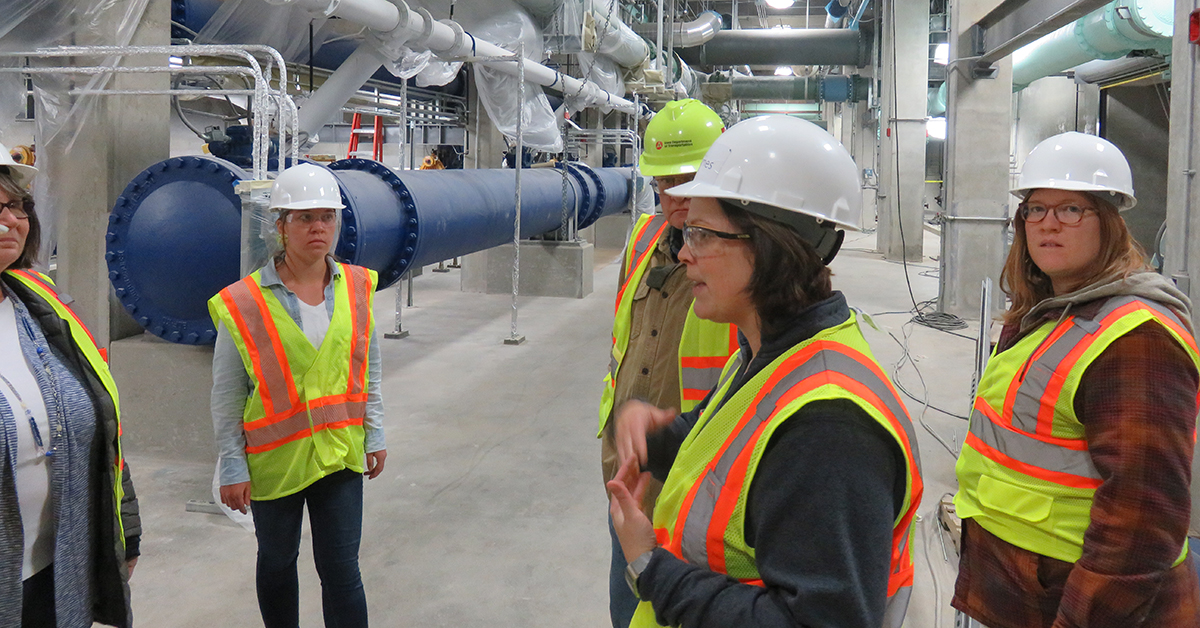
Water Treatment

That’s all above board, but someone else at the DNR went a step further.  Wasteload allocations in the TMDL were further inflated by a factor of two or three to arrive at effluent limits in the permits, using a procedure justified in an obscure interdepartmental memo.  The limits are expressed as total Kjeldahl nitrogen, even though the authors of the TMDL made it clear that other forms of nitrogen are readily converted to nitrate during treatment and in the river.   In short, the limits in the permit allow more nitrogen to be discharged than normally comes in with the raw sewage!

For example:

  • The Storm Lake sewage treatment plant has an effluent limit of 2,052 lbs/day total Kjeldahl nitrogen (30-day avg).  Total Kjeldahl nitrogen in the raw sewage is around 1000 lbs/day.
  • The Tyson meatpacking plant in Storm Lake has an effluent limit of 6,194 lbs/day total Kjeldahl nitrogen (30-day avg).  Total Kjeldahl nitrogen in the raw influent is around 4,000 lbs/day.
  • I also checked a permit affected by the (now withdrawn) Cedar River TMDL.  Same story.  The Cedar Falls sewage treatment plant has an effluent limit of 1,303 lbs/day total nitrogen (30-day avg).  Average total nitrogen in the raw sewage is between 1000-1500 lbs/day.
  • Confused about the units?  That may be deliberate.  Total Kjeldahl nitrogen includes ammonia and nitrogen in organic matter.  Nitrogen in raw sewage is mostly in these forms, which need to converted to nitrate or removed with the sludge in order to meet other limits and avoid killing fish.  Nitrogen in treated effluent is mostly in the form of nitrate.  At the Tyson plant, the effluent leaving the plant has around 78 mg/L nitrate, versus 4 mg/L TKN, but figuring that out required several calculations.  At smaller plants, the data to calculate nitrate pollution isn’t even collected.

As part of the Iowa Nutrient Reduction Strategy, large point source polluters are supposed to evaluate the feasibility of reducing nitrate to 10 mg/L, and phosphorus to 1 mg/L.  Tyson did a feasibility study for phosphorus removal, and is now adding new treatment to its Storm Lake plant.  However, it is not required to evaluate or implement further nitrogen reduction, “because it is already subject to a technology-based limit from the ELG.”  This federal Effluent Limitation Guideline was challenged in court by environmental groups this year, and is now being revised by the EPA.  It allows meatpacking plants to discharge a daily maximum of 194 mg/L total nitrogen!

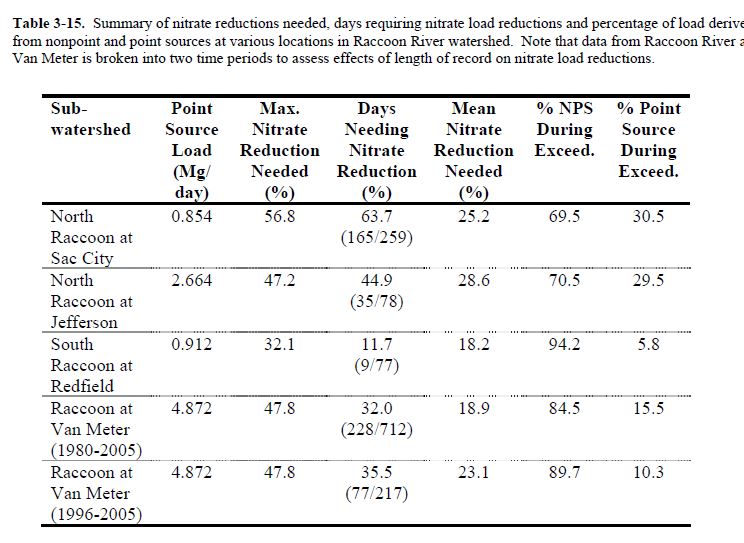
Fortunately, all this creative permitting has little impact on the cost and safety of drinking water in the Des Moines metro.  According to research in the TMDL, point sources only account for about 10% of the nitrogen load, on days when nitrate in the Raccoon River exceeds the drinking water standard.  However, the figure is much higher (30%) for the North Raccoon River.  I started looking at permits and effluent monitoring because I was trying to explain some unusual data from nitrate sensors, brought to my attention by friends with the Raccoon River Watershed Association.  During a fall with very little rain (less than 0.04 inches in November at Storm Lake), nitrate in the North Raccoon River near Sac City remained very high (8 to 11 mg/L).  The two largest point sources upstream of that site can easily account for half the nitrogen load during that period.

Figure from Raccoon River TMDL

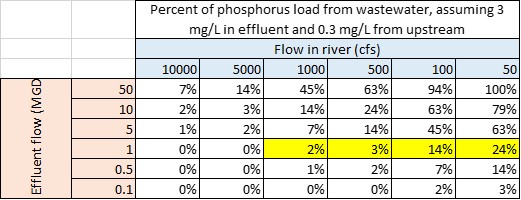
I was glad to be able to solve a mystery, and hope that this investigation can lead to some tools and teaching materials to help others identify when and where point sources could be influencing rivers.   The load-duration curves in the 200-page Raccoon River TMDL are very good, but some people might benefit from something simpler, like this table.  In general, the bigger the facility, the smaller the river, and the drier the weather, the more point sources of pollution can influence water quality, and the more wastewater treatment projects can make a difference. 

Spreadsheet for estimating impact of wastewater.

I made this table to estimate how biological nutrient removal in Nevada and Oskaloosa (about 1 MGD each) could improve water quality in the South Skunk River (about 1000 cfs on average near Oskaloosa, but there could be greater benefit in tributaries, or when rivers are lower).

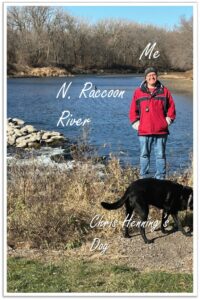
Dan Haug standing by Raccoon River

In this work, I’m supported by partners around the state and a grant from the Water Foundation.  The project (Movement Infrastructure for Clean Water in Iowa) focuses on building connections and shared tools around water monitoring, and will continue through this spring and summer.  The funders’ interest is in helping the environmental movement make the most of the “once-in-generation opportunity” presented by the Inflation Reduction Act and the Bipartisan Infrastructure Law.  This fiscal year, the Bipartisan Infrastructure Law is adding $28 million to Iowa’s Clean Water State Revolving Fund, which provides low-interest loans to communities to replace aging sewer systems and treatment plants.  Can that infrastructure spending help Iowa’s polluted rivers?  We won’t know for sure without better use of water quality data, and greater transparency in state government.

Prairie Rivers of Iowa Director Leaves Behind a Dynamic Tenure of Leadership

Prairie Rivers of Iowa Director Leaves Behind a Dynamic Tenure of Leadership

Prairie Rivers of Iowa Executive Director Penny Brown Huber

Prairie Rivers of Iowa Executive Director Penny Brown Huber has established a culture of teamwork, insight, and encouragement for over a decade. “Her leadership as our executive director has helped create a uniquely talented staff who are working together in our important conservation work,” boasts board chair Reed Riskedahl. Huber has announced she will step down from her position as director on December 15, 2023. The announcement was met with a sense of loss among staff, the board of directors, our partners, and many of those we serve as an organization, but we are grateful for her leadership and wish her the best in her new endeavors. We have all benefited from her encouragement, guidance, and compassion. Thank you, Penny, for the thirteen incredible years of dedicated service to Prairie Rivers of Iowa!

I recently interviewed Huber about her tenure at Prairie Rivers. Here is what she had to say:

What drew you to accept the Prairie Rivers of Iowa executive director position? Did you have a particular passion that influenced your decision?

“I was aware of the excellent work the RC&Ds were doing around the state and respected what Prairie Rivers of Iowa was accomplishing. My passion for helping people and educating them on natural resources led me to want to accept the executive director position.”

What are two to three accomplishments accomplished during your tenure that you are the proudest of?

  • “Continuing to build quality programs supported by science and employing talented and committed people to lead the way.”
  • “Expanding the Prairie Rivers of Iowa brand to serve more people and Iowa’s natural and cultural resources.”

How do you feel your influence and management style have enabled the staff and board members to work at their best? 

“Part of serving as an effective administrator is to work with our people where they are at in building their programs by supporting what they know and helping to move their projects, ideas, and opportunities forward. We cannot do our work alone, so looking for partners and supporters and building effective teams is ultimately how we get things done.”

What kind of shape is the work at Prairie Rivers of Iowa in compared to when you started? 

“The organization has grown a lot both in capacity and resources. In the beginning, it was just our Office Manager Carman Rosburg, and me in the office working with the Board of Directors to lay out a strategic plan to move the organization forward. At that time, there was a group of projects that were not related to each other. Today, we have programs with extremely talented and smart people steering the way on improving water quality, pollinator conservation, and building a vibrant byway program for the Lincoln Highway National Heritage and Iowa Valley Scenic Byways.”

What are the most critical tasks or goals you see for Prairie Rivers as the organization moves forward? 

Building program capacity to address local and statewide projects will open up opportunities for more partners, sponsors, and positive change. Bridging the educational efforts so that citizens become enthusiastic learners and supporters is a pathway to solving the very challenging problems in Iowa.

What would it be if you had to give one piece of advice to your replacement?

Make sure there is time to do strategic thinking both for the overall organization and with the program leaders. Enjoy communicating with a variety of people to really develop a sound understanding of problems and solutions. Creating positive change is about taking one step at a time and, after a period of time, looking back and seeing how you made a difference.

When commenting on moving forward as an organization, Riskedahl adds, “The partnerships that exist throughout Iowa with Prairie Rivers have flourished, and a bevy of supporters continue to give of their time and resources to keep this work progressing.”

“We greatly value the work that Penny has done and want to assure everyone that the Prairie Rivers of Iowa Board of Directors is working diligently to find a new Executive Director to continue this important work,” Riskedahl concludes.

A Year of Pollinator Progress!

A Year of Pollinator Progress!

With your help, Prairie Rivers of Iowa accomplished many pollinator goals in 2023! From mobilizing a city-wide plan to improve the plight of pollinators to receiving a National Fish and Wildlife Foundation grant, we have been working hard to educate the public and serve our community! Besides creating over 30 educational social media posts, providing in-person presentations, and educating at events such as the City of Ames EcoFair, this program has achieved several significant milestones this year:

Mobilizing the Ames Pollinator Plan

This year, we brought the Ames Pollinator Plan to life! Prairie Rivers led the formation of small groups and started projects for pollinators in Ames! Some interesting projects include drafting educational messages about how to support Ames butterflies, understanding how city policy can help residents create more pollinator-friendly yards, and identifying research methods to determine “who”, in terms of pollinators, live right here in Ames! Understanding which pollinators are present will allow us to appreciate and understand the immediate needs of pollinators in Ames. Read our plan that started it all here!

Monarch Magic!

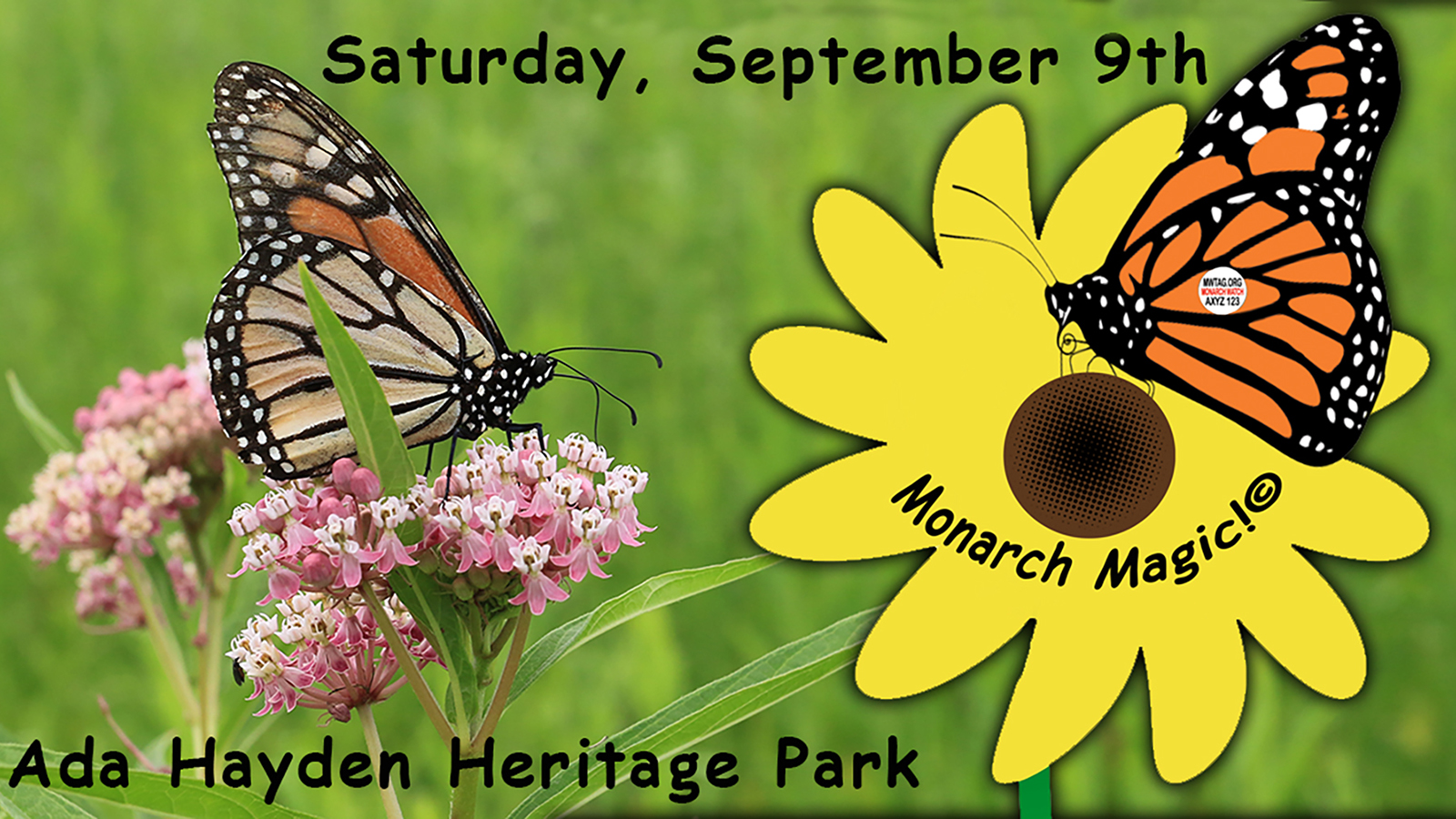
Prairie Rivers of Iowa hosted its first monarch tagging event this year, “Monarch Magic!”. This event pulled many dedicated partner organizations together to create a fun-filled educational event! We had attendees ranging from infants to senior citizens, with over 95 families and groups attending! Together, we tagged 146 monarch butterflies to help scientists track the monarch migration route, their migration timing, and other data to understand how these magnificent butterflies survive one of the most arduous migrations in the animal kingdom. Read more about this event and our incredible partners and sponsors here!

NFWF Grant to help Monarchs and Women!

Most of Iowa’s land is in agriculture (over 85% as of 2021). This fact alone makes it imperative to have farms that mitigate harm and actually benefit Iowa’s natural resources! To achieve this, Prairie Rivers has created a new project, which was recently awarded a grant by the National Fish and Wildlife Foundation. Our project will plant more monarch butterfly and pollinator habitat on farms by reaching out to all farmers but with a particular focus on women landowners and producers. Women landowners and farmers have historically been left out of many beneficial farm and conservation programs due to dated outreach efforts and cultural assumptions. They are an under-utilized group that is very likely to install acres into conservation practices, especially after learning more about pollinator decline! To provide higher-quality outreach and services to these women, we are partnering with Story County Conservation, Boone and Hamilton County Soil and Water Conservation Districts, the Story County Water Monitoring Planning Team, local grain farmer Jim Richardson, and agricultural education expert Dr. Jean Eells. With this team, we will construct messages that are inclusive and compelling to all farmers and landowners, including women, create field days of learning specifically for women, and raise women’s awareness of opportunities for cost shares and conservation programs. We hope this project will not only get more pollinator habitat on the ground, but that it will also create peer and mentor networks for women in agriculture and also set up an effective and sustainable communication system between women and the NRCS (National Resource Conservation Services). Our project will focus on reaching farmers and implementing conservation practices within Story, Boone, and Hamilton counties.

THANK YOU again for supporting Prairie Rivers of Iowa and our pollinator program! Together, we are creating a lasting, positive impact for the people and pollinators in Iowa!

To invest in a positive Iowa future, click here!

Prairie Rivers of Iowa Has Had a Busy and Productive 2023

Prairie Rivers of Iowa Has Had a Busy and Productive 2023

Hello and Happy 2023,

Prairie Rivers of Iowa has had a busy and productive 2023 in Iowa, working on a variety of important initiatives related to creating a healthier natural environment and preserving the rich cultural heritage of Iowa.   As we end this year, we have touched kids, families, landowners, historic homeowners and business owners, communities, natural resource professionals, like-minded not-for-profits and oversaw a national prairie conference in Iowa.

Here’s a summary of some of the key accomplishments and initiatives this year:

EDUCATIONAL VIDEO SERIES – We created a weekly video series for YouTube and Instagram The Clean Water Act: 50 Years, 50 Facts. We produced 45 short videos filmed at dozens of locations (including knee deep in a marsh) and featuring 5 music parodies.  The educational videos covered various aspects of water conservation, law and policy.

Water Testing Ioway Creek Near Stratford in Hamitlon County

MONTHLY STREAM MONITORINGConducted monthly monitoring of at least 15 streams, providing updates in the Prairie Rivers monthly newsletter.  Additionally, coordinated volunteer “snapshots” with neighboring counties and supported school groups interested in water monitoring. Additionally, we published a 65-page report analyzing water quality data, including a novel way of looking at the data.

SECURED A NATIONAL FOUNDATION GRANT – This grant assists us in building a network for interpreting water quality monitoring data.  Seven partners joined Prairie Rivers to focus at sharing best practices, looking for tools to monitor E. coli in our streams, providing a monthly opportunity to express their concerns and planning for an Iowa Water Summit in 2024.

Ioway Creek Cleanup

TWO TRASH CLEANUPS — (1) May 2023 — Cleaned Ioway Creek by canoe, S. Grand to S. 16th St (Ames), 40 participants.  The trash collected weighed 3,020 pounds and included 20 tires and three rims. Partners included: Story County Conservation, Skunk River Paddlers, the City of Ames, Outdoor Alliance of Story County.  (2) August 14, 2023 – Cleaned a tributary of Ioway Creek in Stuart Smith Park (Ames), on foot, nine volunteers, 350 pounds of trash removed.  Partners included Iowa Rivers Revival, Green Iowa AmeriCorps and the City of Ames.

POLLINATOR CONSERVATION Launched a 10-year plan involving over 40 persons serving on a committee to support pollinator conservation.  This plan is aimed at conserving pollinators and their habitats, which are crucial for the environment.  You can see the plan at www.prrcd.org.

Monarch Magic Family Fun Event on September 9th, 2023

MONARCH MAGIC Held the first Monarch tagging event in September, where over 300 kids, their families, and others learned about pollinators and tagged 146 Monarchs.  We had 10 sponsors and partners at Ada Hayden Heritage Park and plan to do it again in 2024.

HISTORIC RESOURCE PRESERVATIONReceived a grant from Iowa Cultural Affairs and successfully surveyed 319 historic listings on the Lincoln Highway Heritage Byway.  In 2024, we will present the findings to elected officials and other interested persons in the 43 communities along the Byway to inform and develop a plan for the restoration and preservation of these important Iowa heritage properties.

BYWAY COORDINATOR AND PROJECTS – Hired a new Byway Coordinator, Jeanie Hau, who is actively working to support our Byway projects.  Prairie Rivers signed a new contract with the Iowa DOT to support work on the Iowa Valley Scenic Byway extending our efforts to preserve Iowa’s heritage.  This Byway begins on Highway 30, Montour turnoff, and travels through the Amana Colonies for a total of 77 miles.

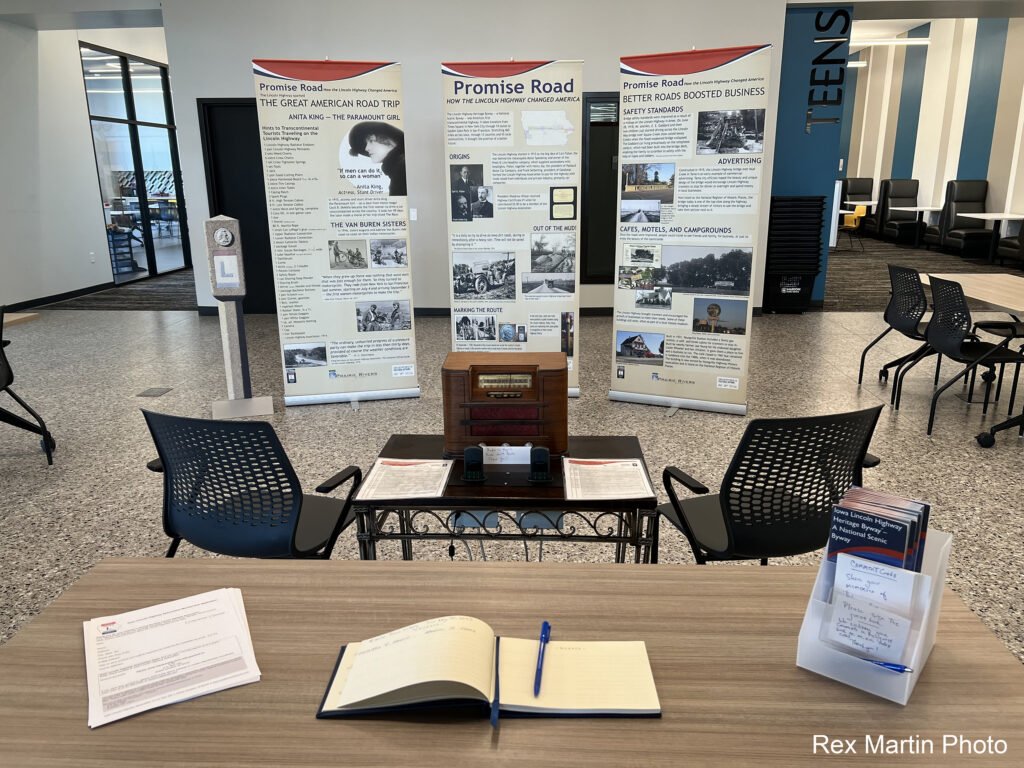
TRAVELING EXHIBITThe Lincoln Highway Heritage Byway traveling exhibit called The Promise Road:  How the Lincoln Highway Changed America has been displayed at various locations, allowing visitors to learn about the rich history of this historic road.  It’s available for display in museums, libraries, and other community spaces.  So far the exhibit has traveled to Jefferson, Grand Junction, State Center, Nevada, Linn County Historical Society: The History Center, Cedar Rapids History Museum, Nevada Library, Marion Public Library, Carroll Public Library, Harrison County Welcome Center, and currently at the Council Bluffs Public Library.

Lincoln Highway National Heritage Byway Traveling Exhibit

We cannot do this work without your support!

Today, we are asking you as a supporter to make an end-of-year gift of $50.00 to Prairie Rivers of Iowa.  Your support shows us to keep up the good work!   You can make a gift here online or by going to our donation page for additional options. We know that as good stewards of the land, you see how important this work is today.

It is so important for a not-for-profit to receive gifts from individuals. Hearing from you encourages and supports our very difficult work in support of the natural and cultural resources in Iowa.
Thank you!

Board of Directors
Reed Riskedahl, President
Mark Rasmussen, Treasurer
Doug Cooper, Secretary
Erv Klaas
Bob Ausberger
Chuck Stewart
Rick Dietz
Jim Richardson
Christopher Barber

Staff
Mike Kellner, Marketing and Public Relations
Dan Haug, Water Quality Specialist
Jessica Butters, Pollinator Conservation Specialist
Jeanie Hau, Lincoln Highway Heritage Byway & Iowa Valley Scenic Byway Coordinator
Carman Rosburg, Office Manager
Daniel Huber, Technology
Shellie Orngard, Historic Properties Consultant

One-Time Donate to Prairie Rivers of Iowa
Minimum Price: $5.00

Unexpected Friends: Bugs Are Not Invading Your Home

Unexpected Friends: Bugs Are Not Invading Your Home

This time of year we seem to notice more bugs* indoors. For some people this isn’t worrisome. For others, it may mean frantic googling to ensure you’re not seeing an unknown pest. In this article, we discuss 1) trustworthy sources of information about bugs in the home, 2) common bug misconceptions, and 3) which bugs you might see in your house this time of year.

 *The term “bug” in this article is being used to refer to any insect, spider, or other arthropod. Technically, the word “bug” refers to insects within the order Hemiptera, which is a specific group of insects. We are using this term generally to keep the text simple.

Let’s get right down to it: pest control company websites are not good sources of information. Many are hoping to sell you a service. Some companies may state on their website that certain bugs are harmless, but a nuisance. This is an accurate statement (although, is the bug actively annoying you, or are they just standing on your wall 10 feet away?). However, these companies continue on to exaggerate the venom in spider bites (more on this later), rare allergic reactions, and inflate the idea that bugs are trying to “invade” your home (most are not). Additionally, I’ve found pest control companies that call some insects beetles that are clearly not beetles, and make false statements about native bee nesting behavior. Pest control’s expertise is in extermination, specifically of truly harmful pests. When it comes to harmless bugs, which is what you are likely finding in your house, they simply do not have good information.

 The best place to learn about a bug in your house is through university and extension websites. These websites are created with a focus of educating the public, not selling services. If you look through these websites and can’t find information about your specific bug, Iowa State University offers free photo identification through their Plant and Insect Diagnostic Clinic, and their entomology department staff would probably be willing to receive bug photos through email as well.  I would also recommend Chris Helzer’s blog and the Xerces Society.  We do our best to provide accurate and interesting articles too! 

Unfortunately, when you google “house bugs in winter”, pest control companies have paid to be the links that appear at the top of the return list. You’ll have to scroll down to get better sources to answer your question or add terms like “university” or “extension” to your search. 

Glowing Jack-O-Lantern

Bugs add beauty to our world!

Common bug misconceptions

No, most bugs are not actively trying to enter your house. Bugs are adapted to thrive outside, and mostly wander in by accident or are brought in by you through clothing or wood for your fireplace. No offense, but most bugs think your home is a subpar habitat. Compared to the outdoors, your house is probably too dry (many bugs are prone to drying out, which is lethal to them). Secondly, your house has very little food in terms of dead leaves, other bugs, and plants. You may have indoor plants, but they are probably not what most bugs are adapted to eat. Lastly, many bugs in Iowa overwinter outside, near or in the ground, as larvae, eggs or pupae. The adult bugs you see are likely on their final days because most adult bugs in Iowa are not adapted to surviving winter. If they do overwinter as adults, they are likely slow, don’t eat much (if at all), and don’t reproduce. The best way to keep bugs out of your home is to caulk holes and cracks, check screens for holes, and fix any drafts in doors and windows. Many pest control companies boast about their pesticide treatments that “create a border/defense” around your house to keep all bugs out. This kind of broad treatment will also harm non-pest insects, such as next year’s fireflies (their juveniles overwinter in soil), ground-nesting bees, and other beneficial insects.

Bugs you may see around your house this winter

Spiders: Some spiders have the ability to bite, but most will not unless they are handled roughly. They are not “invading” your home. They may have been in your house for a while, but are now more active because it’s mating season. Another reason you may see them more is because your doors and windows were open thanks to the lovely fall weather, and they wandered inside. Serious reactions to spider bites are very rare. Even the brown recluse spider avoids people, and only 10% of people develop a reaction to their bite. Truly: 90% of people who are bit by brown recluses are completely fine, with no complications or problems. A quick iNaturalist search will show you how rare brown recluses and black widows are in Iowa. If a spider (or really any bug) bothers you, catch them and release them outside, or vacuum them up and empty your vacuum (minus the household waste) outside.

Reversed Haploa Moth

A pretty emerald jumping spider.

Multicolored Asian lady beetles (Harmonia axyridis): These beetles are not native to Iowa, though they look similar to many of our native species. They helped you in the garden all summer by eating aphids and other pests. Yes, they can nip if handled, but it feels like a small prick and leaves no resulting bump or itchiness. Like most bugs, they do not reproduce in homes. Lastly, don’t you think this is the cutest bug you could hope to find in your house? I’m always happy to find one inside when it’s cold out; it’s like a small piece of summer reappeared.

Common Buckeye

The cute multicolored Asian lady beetle.

Brown marmorated stink bugs (Halyomorpha halys): These bugs are not native to Iowa, and may nibble on some indoor plants. Yes, they do seek warmth, but they want to stay outside, where they receive direct sunlight. If found indoors, know that they didn’t mean to find a gap in your window and wander in. I only get them when I don’t check outdoor plants before bringing them inside. These bugs only stink if you smash them, so be sure to catch and release them or vacuum them up. They will not reproduce/lay eggs during winter. I’ve never been bit or smelled anything foul by just removing them with my hands and tossing them out the door into some bushes.

Common Buckeye

The friendly stink bug!

Boxelder bugs (Boisea trivittata): Yes, they gather on the sunny sides of buildings for warmth, but that’s where they want to stay. Maybe when you opened your door two of them were swished inside. These bugs are great because they don’t bite, don’t harm plants, don’t eat human food, and do not reproduce during the winter. They don’t even harm the plants they’re famous for feeding on (boxelder and maple trees)! They have cool red lines and little red eyes, making them look like little superheroes or race cars, which I find quite endearing!

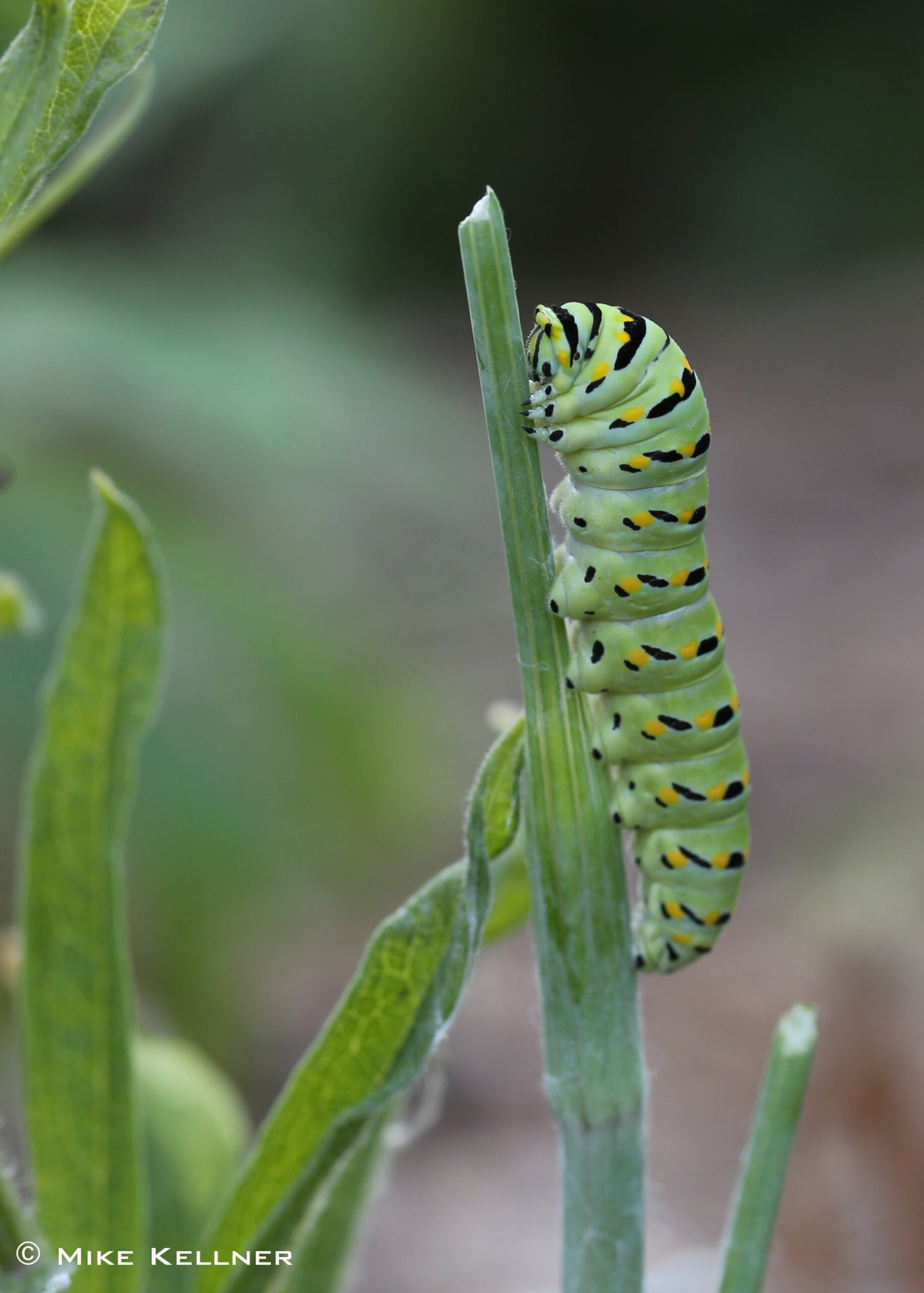
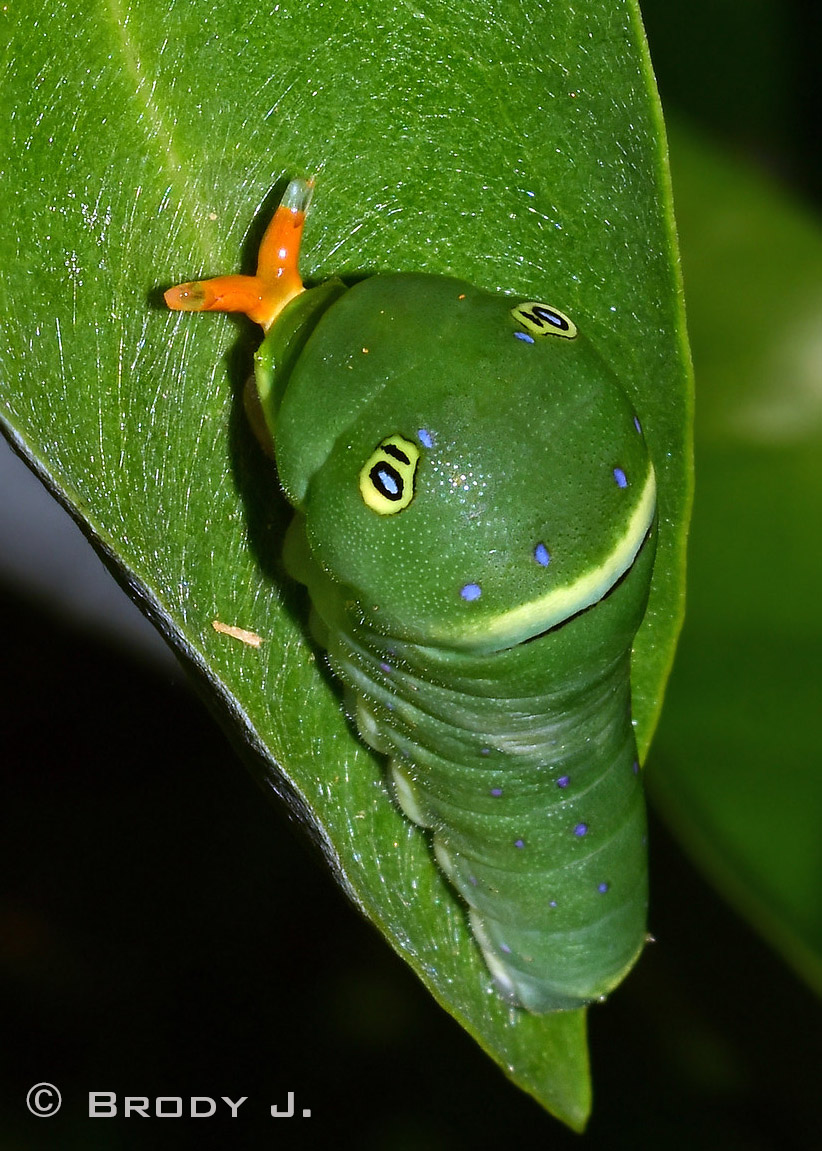
Swallowtail Caterpillar

The boxelder bug with racing stripes.

As the days get colder, try to be curious and more understanding when you find a bug unexpectedly in your house. They are not invading vermin; oftentimes they are friendly wanderers that found a crack near your window. Take some time to take pictures and learn about the bug before releasing it outside. You might learn something new, and it would be a nice reminder of summer during some of the drearier days of the year.

Support bugs this season by leaving your leaves, keeping your outdoor lights wildlife-friendly, and staying curious!

Other great sources to learn more about bugs are the University of Wisconsin’s Bug of the Week and the Missouri Department of Conservation.

Further reading: An article explaining a study by the California Academy of Sciences on the ecology of bugs found in homes (homes are likely a passive travel area for bugs, and not an attraction).