A Novel Way to Preserve a Historic Dining Experience

A Novel Way to Preserve a Historic Dining Experience

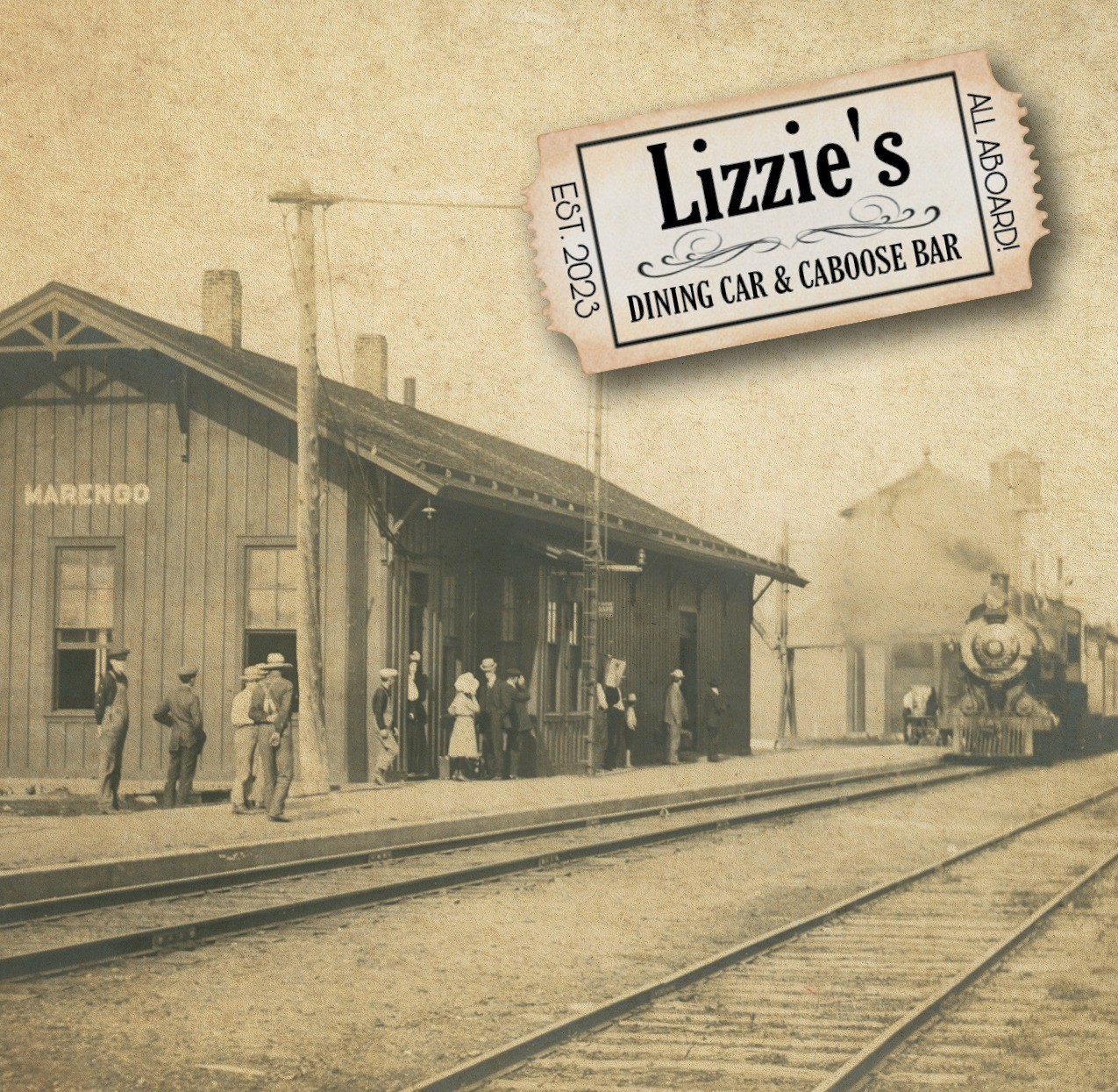
Lizzie's Dining Car Marengo Depot

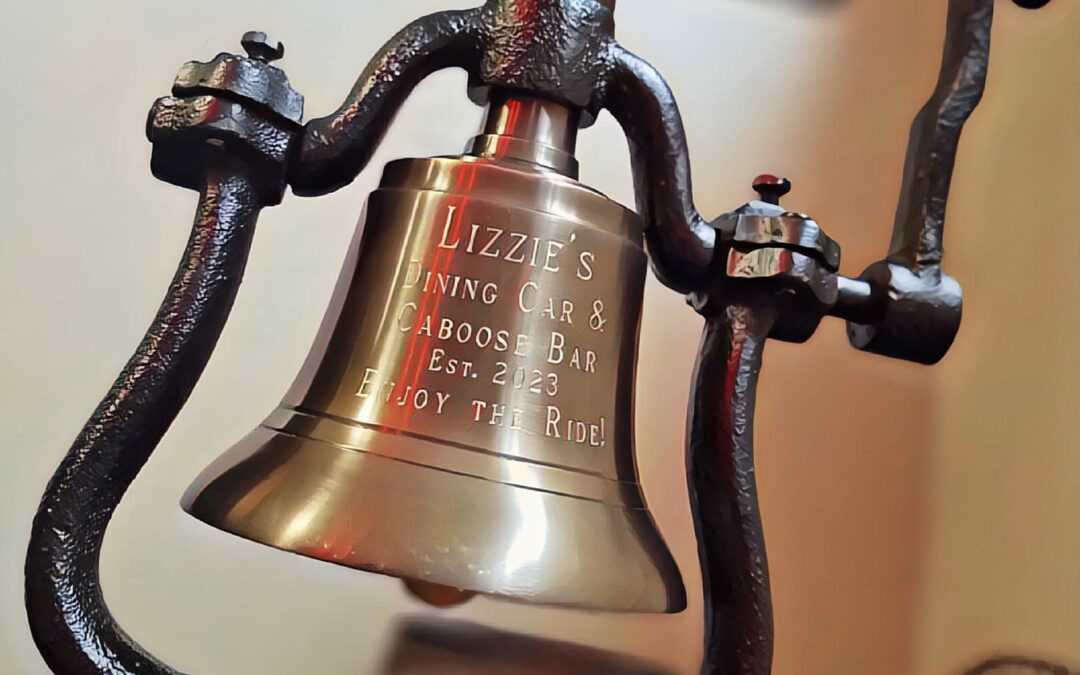
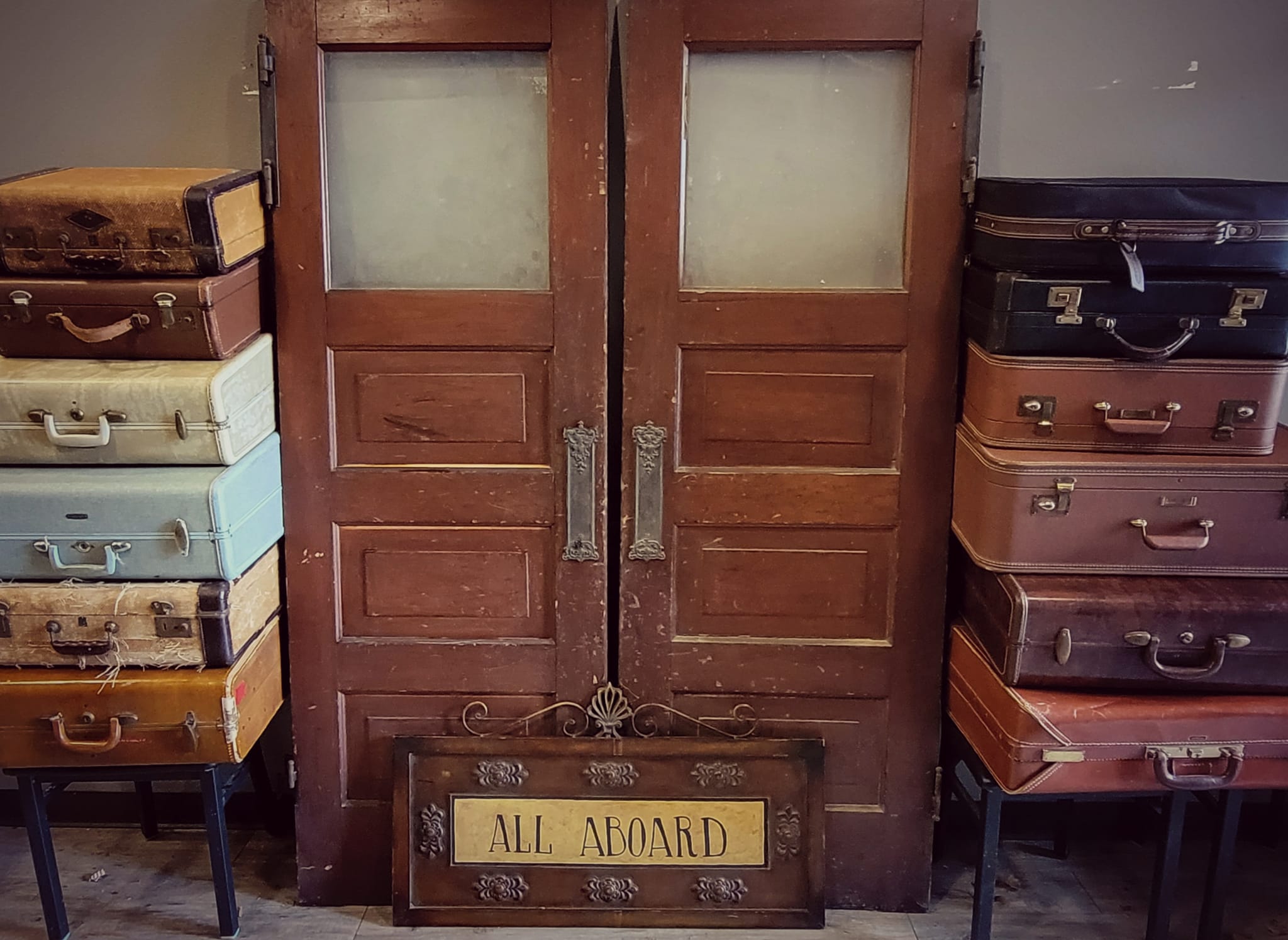
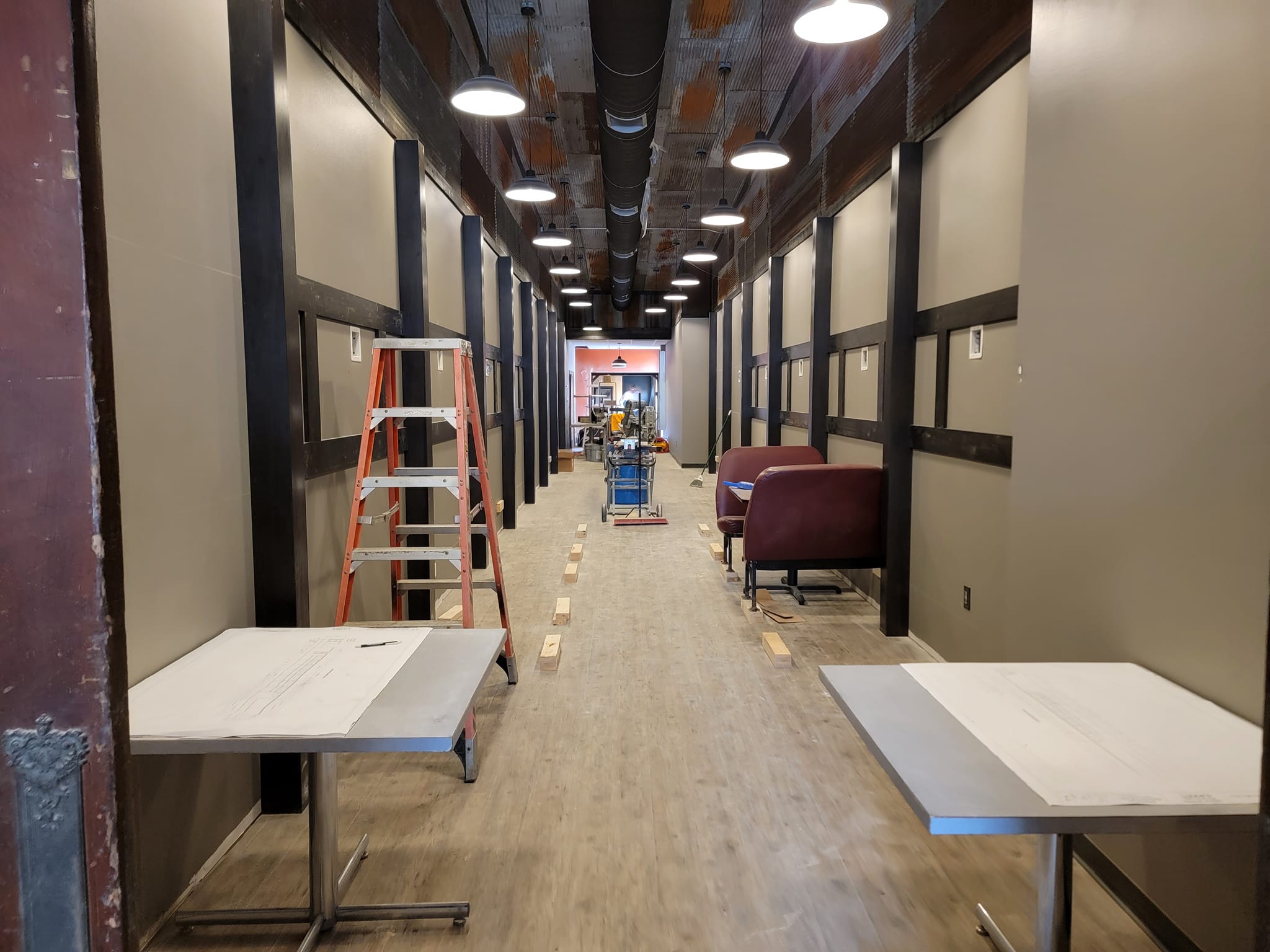
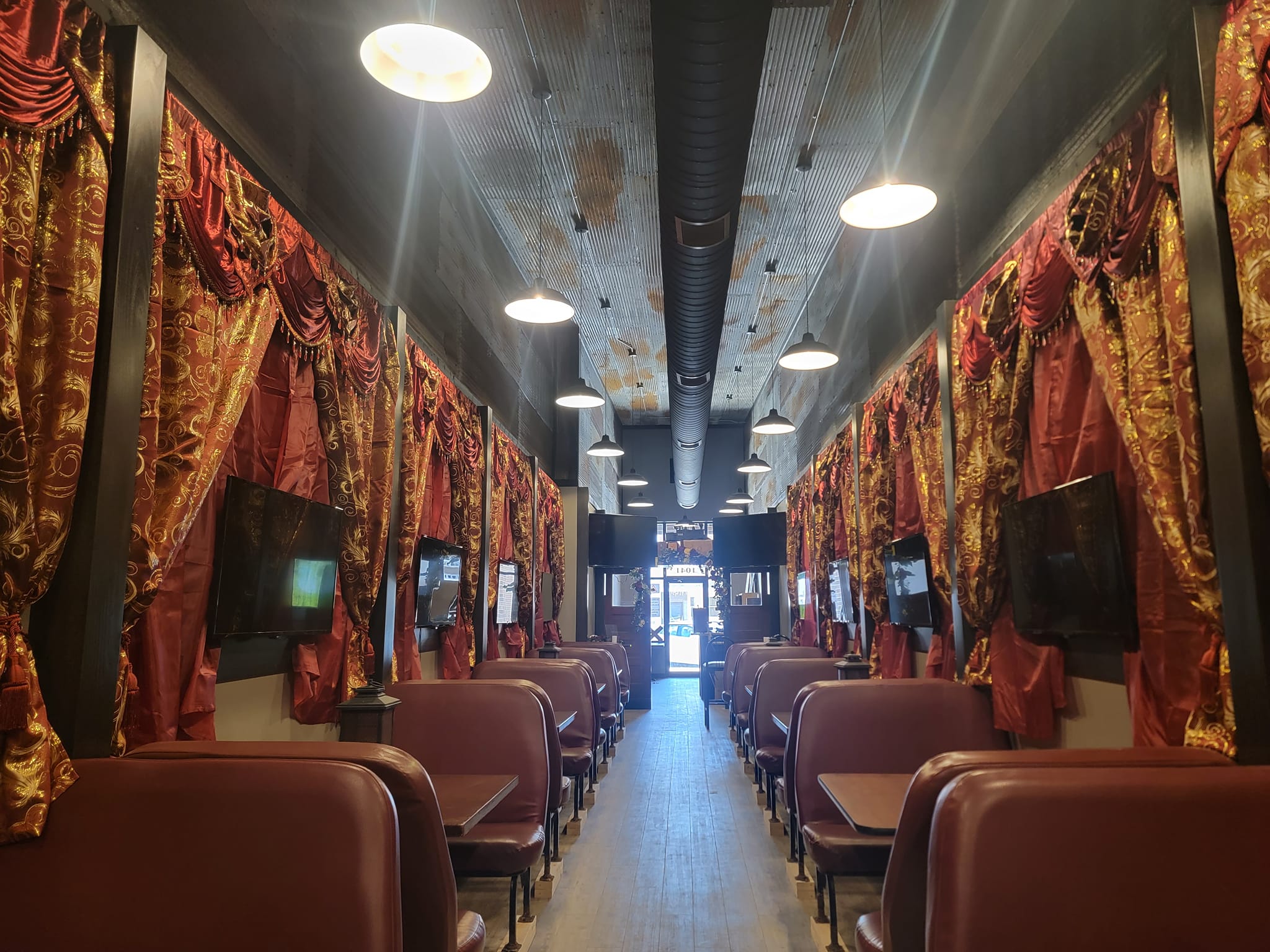
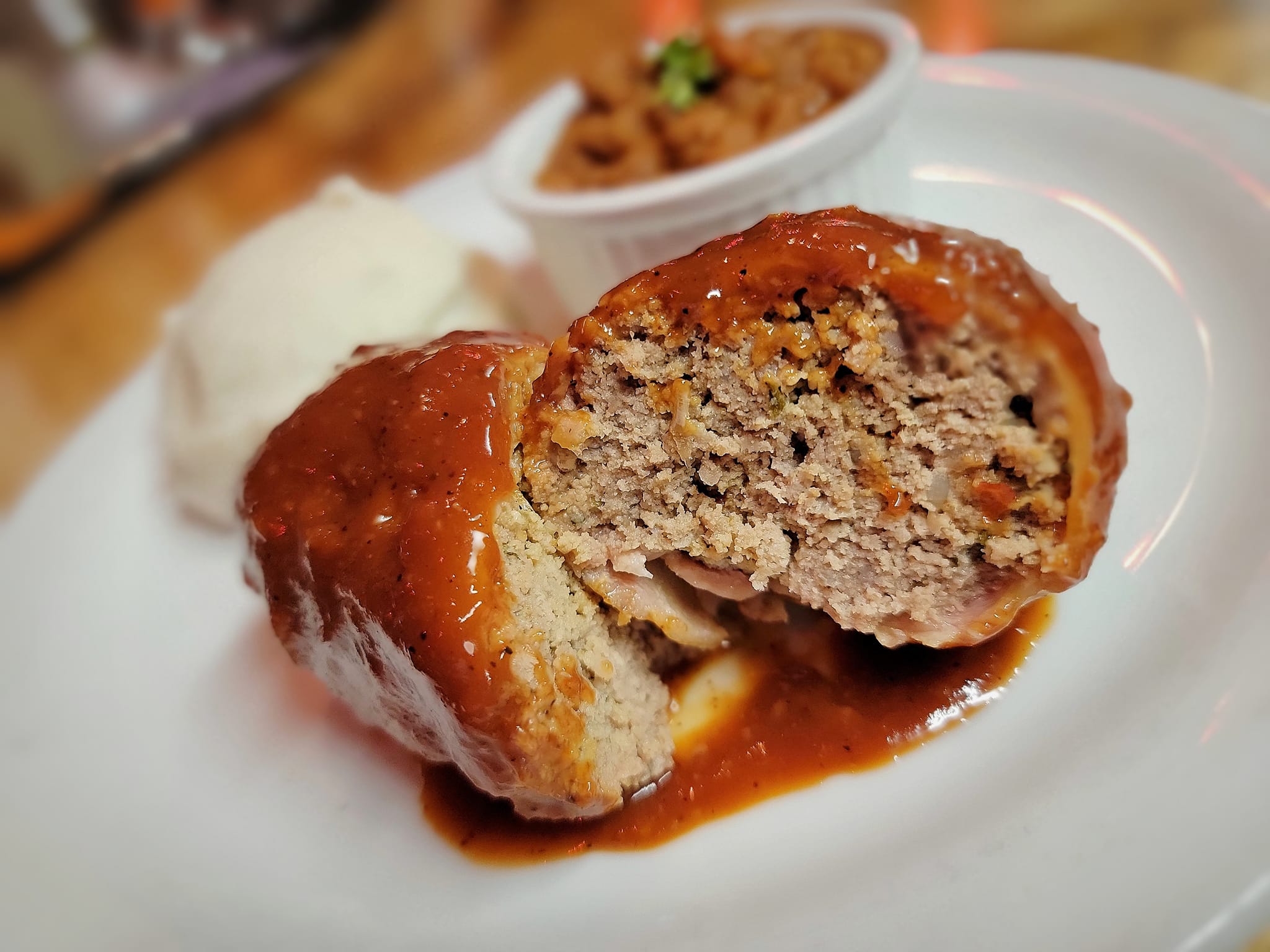
Lizzie’s Dining Car & Caboose Bar is a new dining experience based upon the historic passenger cars that frequented Marengo from 1860-1970.  Located at 1041 Court Ave, Marengo, Iowa, the immersive experience Elizabeth Colony has created is that which can be compared to a movie set created in Hollywood. The transformation of blank walls in a brick and mortar building into a trip back in time on a railroad dining car is enhanced with “windows’ ‘ showing outdoor scenes that move at the speed of a locomotive. Only the smells and tastes of the home cooked food and drink give away the truth that this is not an actual passenger dining train. 

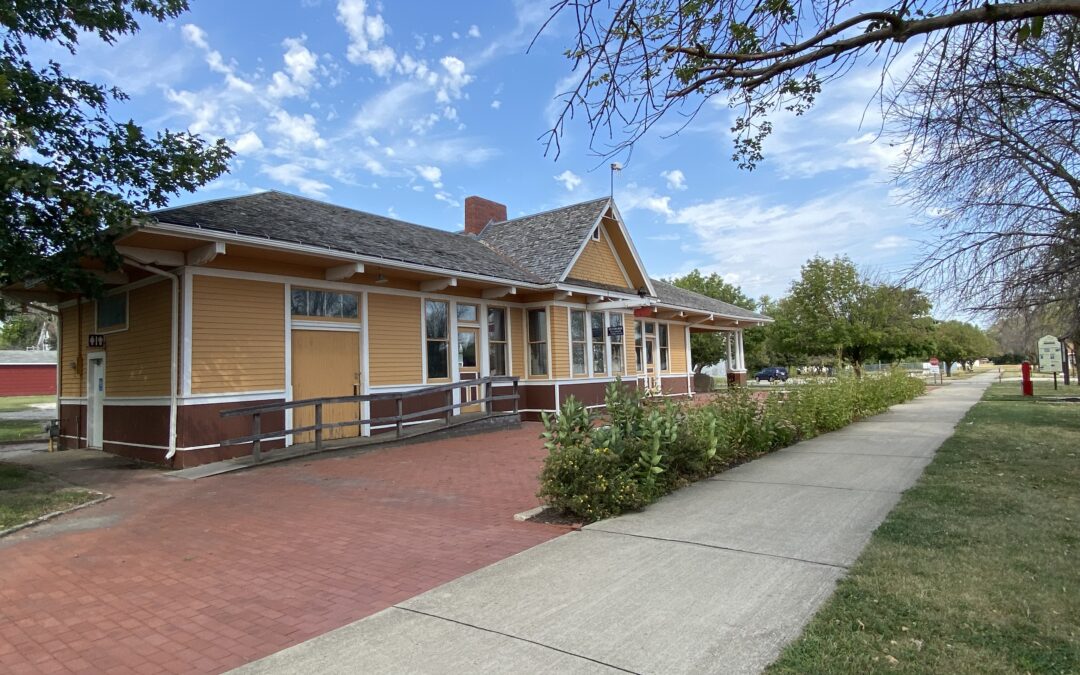
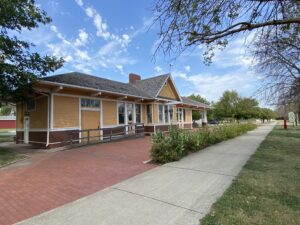
Elizabeth (Lizzie) was inspired to create this dining experience from the rich history of the town in which she lives. The Mississippi & Missouri (M & M) Railroad Co extended its rail line from Iowa City to Marengo in 1860. A short 18 months later the railroad line was continued to Wilson (present day Victor) and finally Council Bluffs. The train brought thousands of passengers and freight through the Iowa Valley including presidents Truman and Eisenhower and even the Liberty Bell.  The local newspaper reported in 1899 the anticipation of an Orphan Train to arrive in Marengo; several children were received in homes in Koszta, Blairstown, South Amana, and Marengo. Although Marengo received its last passenger train in 1970 and the depot was destroyed sometime in the 1980s, a portion of the original depot from Wilson (Victor) can be seen at the Iowa County Pioneer Heritage Museum

Lizzie’s Dining Car & Caboose Bar is not a historic train car. What is preserved at Lizzie’s is the atmosphere of a historic moment. It is an immersion of the senses into a time when the world was opened up to new possibilities through train travel.

The unique atmosphere was created within two walls of a downtown storefront.  As you enter the dining car, layered drapes of vintage fabric frame windows which are actually televisions. The televisions display movement through woodlands, beaches, or winter scenes.  The visual creates a sensation that you are on a moving train. On each side of the aisle are small booths igniting an intimacy for quiet conversation. Boxcar Meatloaf or Atlantic Railroad seafood and a drink from the bar completes the scene.

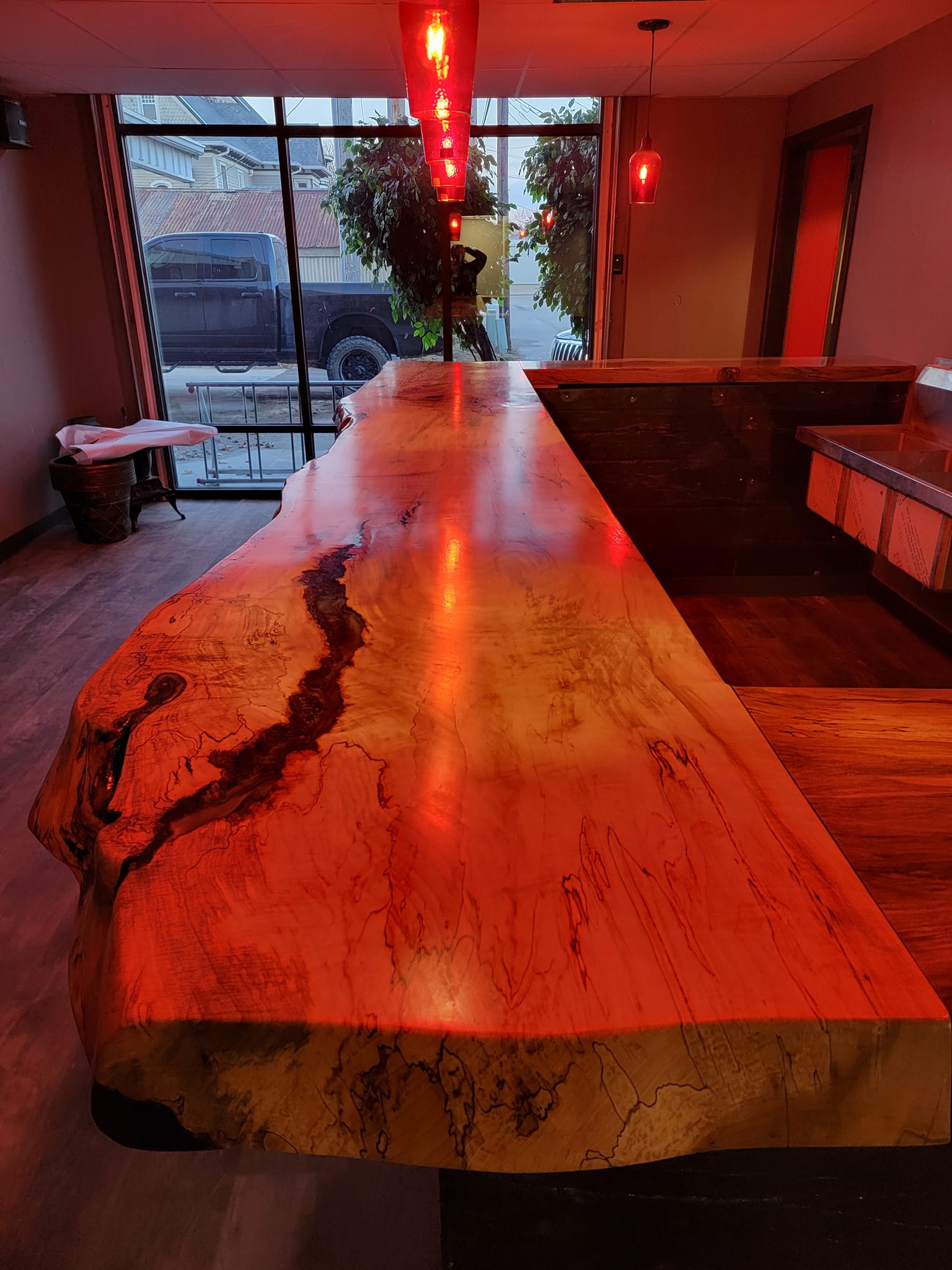
At the end of the railroad car is the Caboose Bar. The countertop is a single piece of cut tree that adds a natural element to the traditional “L” bar configuration found on a passenger train. The illusion is complete. 

Marengo is located in the heart of the Iowa Valley Scenic Byway where a rich collection of cultures, stories, activities, and historic scenic views remain today. The preservation of our stories is only limited by the creativity used in choosing how to tell them.   

Information for this article was informed by articles written by Bob James for 98.1 KHAK published May 16, 2023 and Marilyn Rodger, Guest columnist for the Southeast Iowa Union published Sep. 14, 2023 and Elizabeth Colony, owner/operator of Lizzie’s.  For more information on Lizzie’s Dining Car & Caboose Bar visit Facebook.

After 100 Years, Preston’s Station is Now in Its Preservation Era

After 100 Years, Preston’s Station is Now in Its Preservation Era

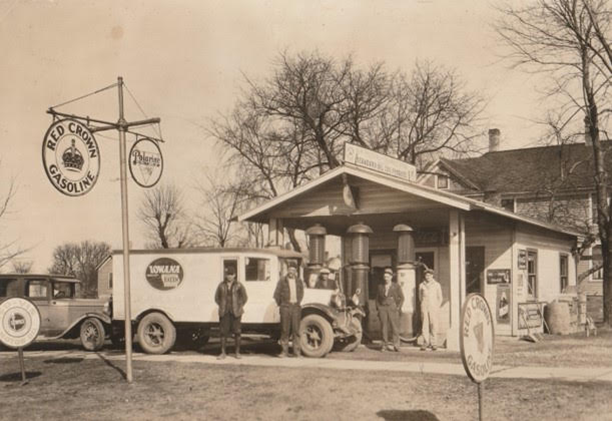
Preston's Station 1927 - 1928

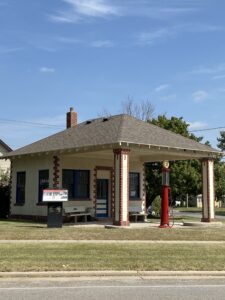
Mary Helen’s great-grandpa George W started something when he purchased a Standard Oil station for his four boys in 1923.  Little did he know what his then 12-year-old son, George H, would do to create a legacy for the family.

The building bought for a mere $100 (“well that was all that it was worth in 1923” – George H. Preston – The Tonight Show Starring Johnny Carson) was built in 1912, just before the start of America’s first transcontinental roadway, the Lincoln Highway. The Highway originally went past the Standard Oil Station but was relocated to the south around 1927, so the family decided to move the station.

One sunny day in 1928 (ish), if you were walking down 8th Ave or 13th St in Belle Plaine, Iowa, you would have witnessed a mule team pulling a building loaded on a sleigh down the street to where Preston’s Station would remain to this day. Eventually, the family would turn the original garage behind the house into a cabin and add a larger garage and a three-room motel.

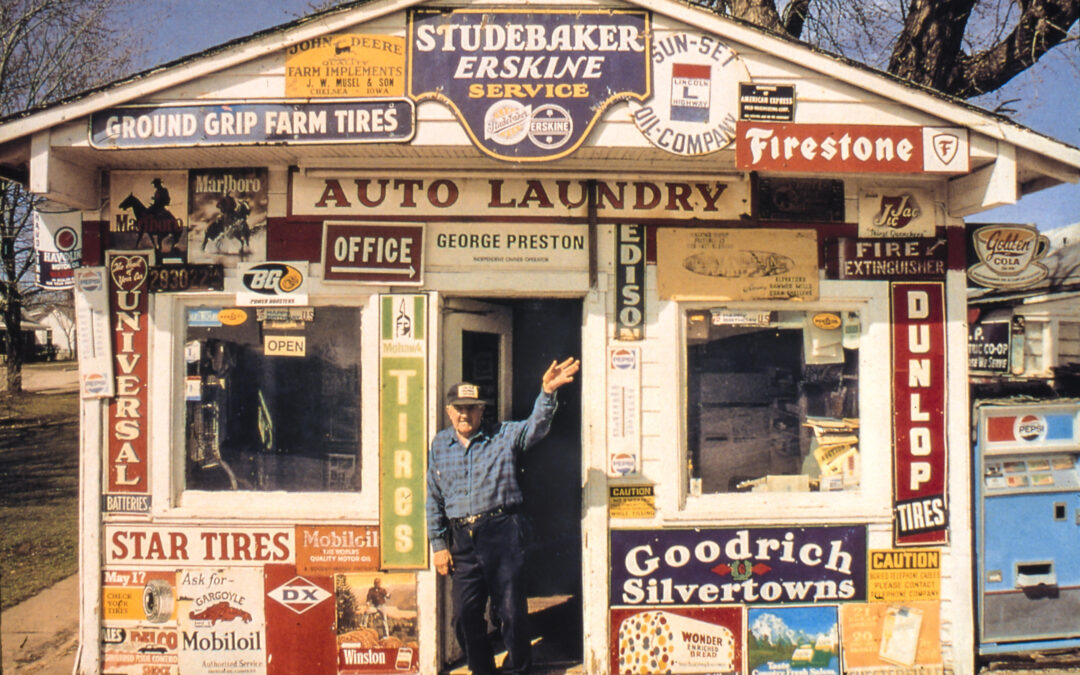
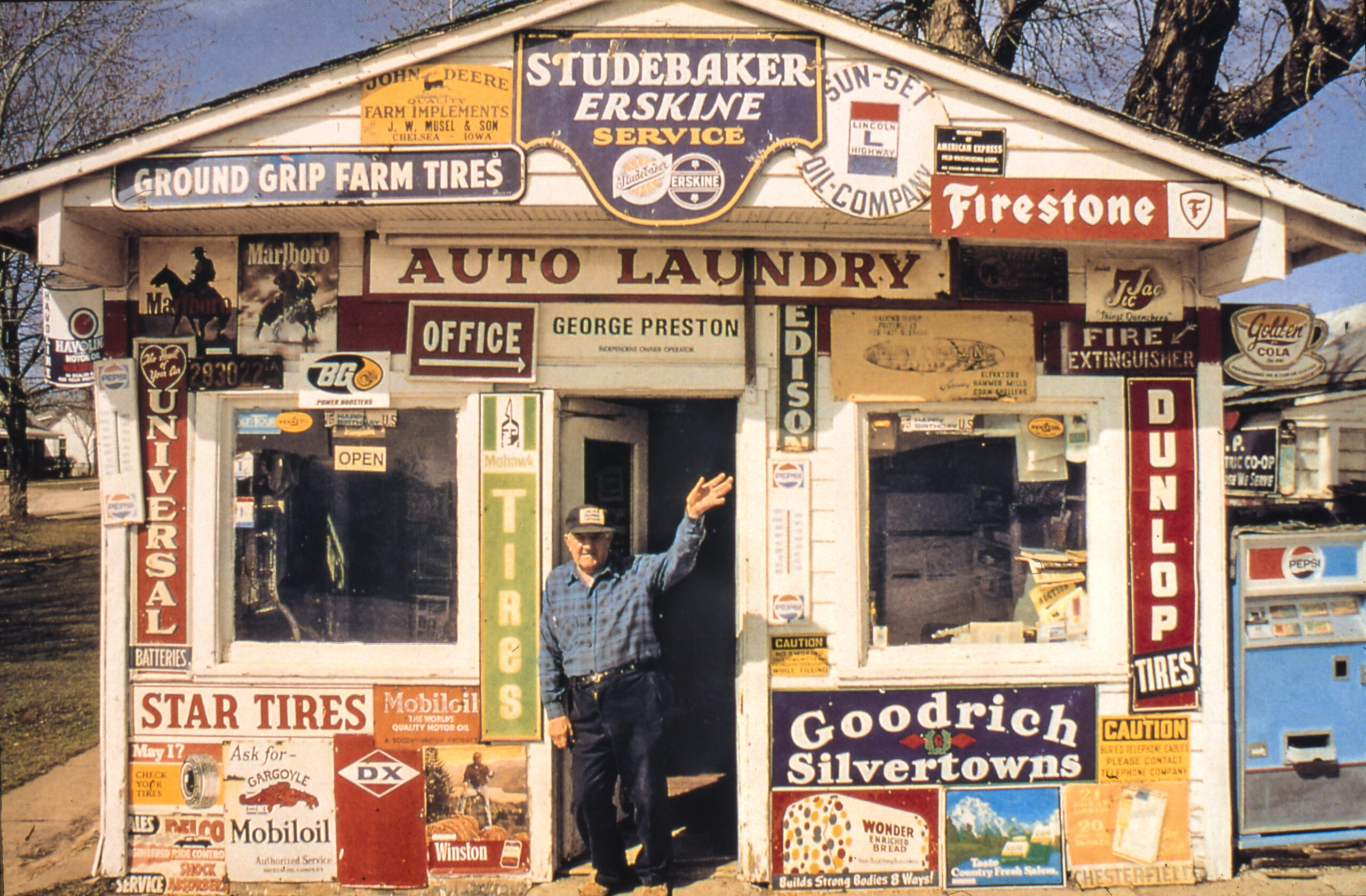
George H loved more than anything to bend the visitor’s ear.  Running a gas station, sometimes bus station, and garage for 60 years gave him plenty of stories about life along the Lincoln Highway.  George was so taken by his life along the Lincoln Highway and the stories he heard from travelers he became a strong promoter for the Lincoln Highway and for the town of Belle Plaine. George would tell his stories to anyone who would listen, and much like the game of telephone, over time, it became hard to know what stories were true and which were tales that simply grew taller through repetition.  George was a collector as well as a talker and his signs covered the station.

George H. Preston at the station.

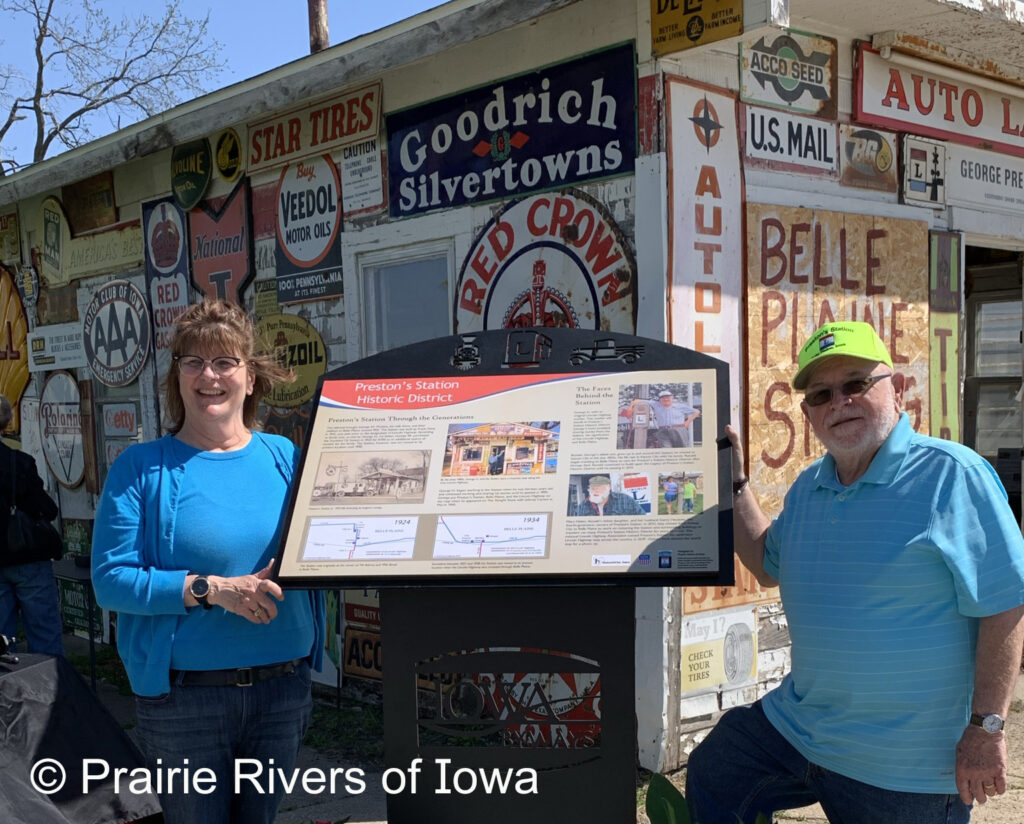
George and his sign-covered station had unwittingly become a staple stop along the Lincoln Highway from New York to California well after they stopped selling gas in 1989. The station ran as a Standard Oil station for approximately 40 years and as a Phillips 66 station (Preston’s 66) for 30 years. George saw the value in storytelling through antique items such as signs and matchbooks long before it became an American pastime. To this day, people stop to have their pictures taken at the station with George’s signs.

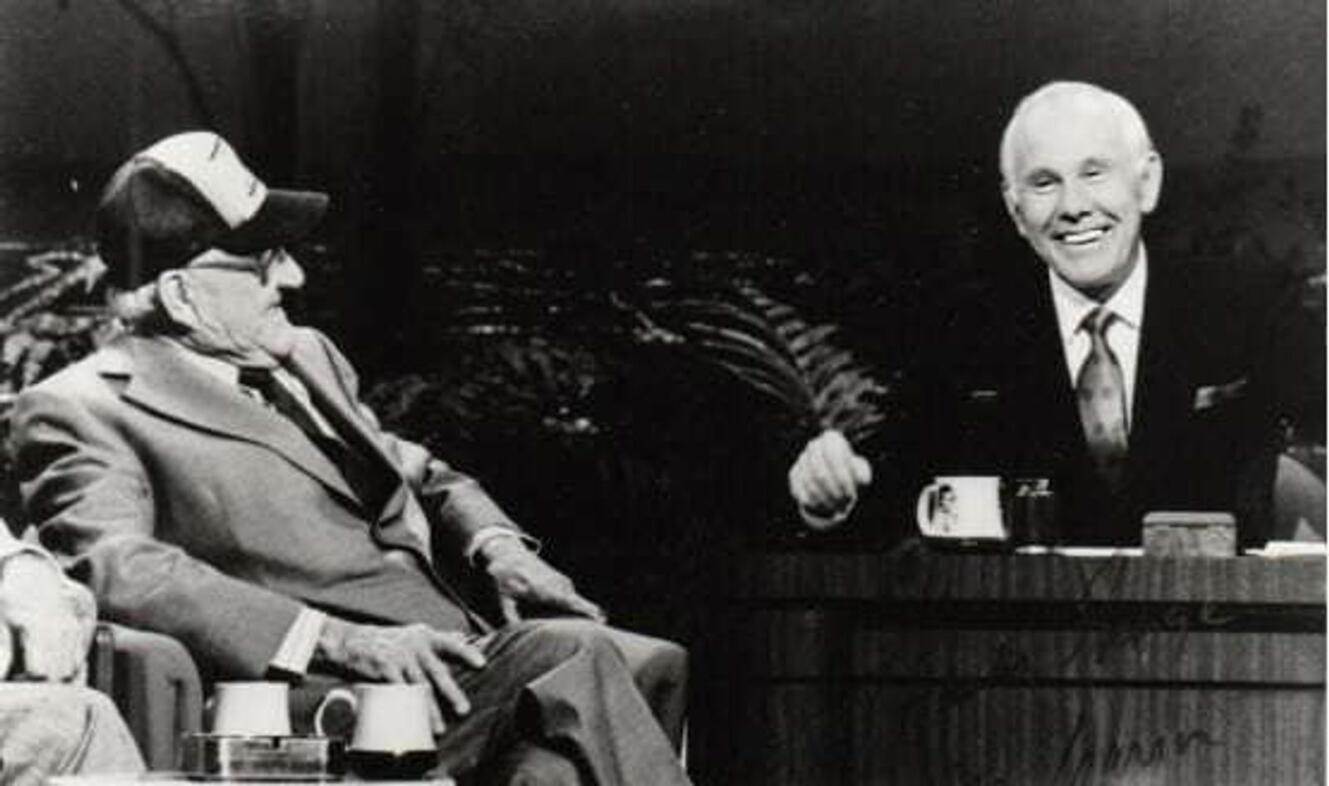
Eventually, his roadside museum became famous along the Lincoln Highway; however, it was catapulted to a new level of fame when George was invited to be a guest on The Tonight Show Starring Johnny Carson show in 1990. Johnny was so taken with George because he couldn’t get a word in, and suddenly, his five-minute segment became 15 minutes. George and Johnny exchanged Burma Shave jingles, talked about Greorge’s 900 number to hear Lincoln Highway tales, and the Belle Plaine, Victor, and Deep River trail (today’s HWY 21).

George H. Preston on the tonight Show in 1990.

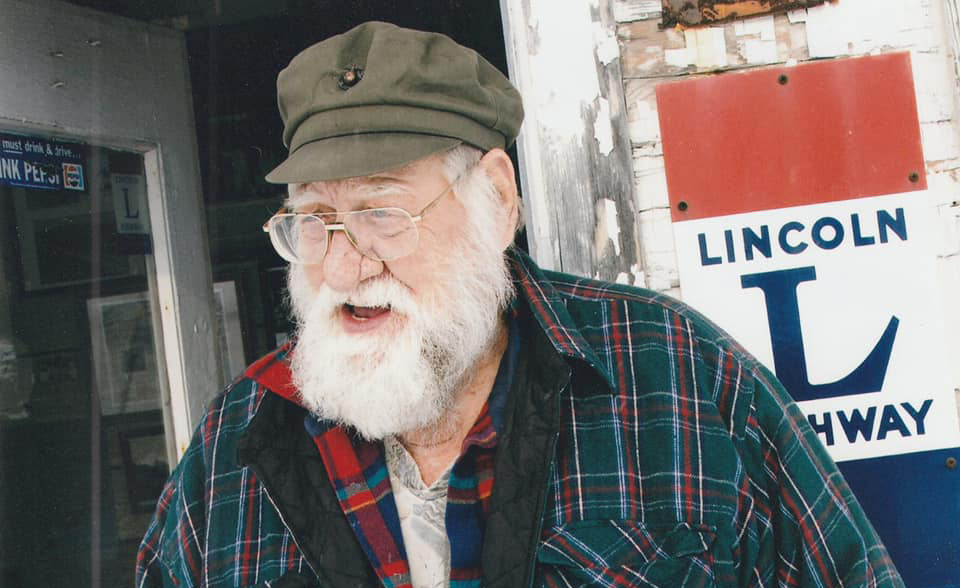
When George passed away, his oldest son, Ronald, began to carry on his father’s legacy and continued to tell the stories and collect the antiques (or junk, as some would call it). Ronald got involved with the re-invented Lincoln Highway Association tasked with preserving the stories of the Lincoln Highway and spent his final years becoming a part of the Belle Plaine Community like his dad. Unexpectedly, Ron passed away in 2011, and it was time for the next generation of Prestons to decide what to do.

Ronald Preston

In steps, Ronald’s eldest daughter, Mary Helen, and her husband, Garry Hevalow, now the fourth generation Preston family, made a plan to continue the legacy.  Before they even moved to Belle Plaine from Kansas City in 2017, they got to work clearing the extra, inventorying the museum, and planning for the buildings to be inspected for restoration. The station building is now over 100 years old (remember it was built in 1912) and has significant deterioration. Additionally, Mary Helen jumped into her father’s footsteps by joining the Lincoln Highway Association and has served as President of the Iowa Chapter for several years now.

Mary Helen Preston and Garry Hevalow with interpretive panel highlighting the station's history.

Finding the right grants, writing them, and qualifying for state, federal, and local funding for restoration is a long and arduous process. Mary Helen and Garry created a non-profit organization for the station and then began the process of applying for national recognition. In 2020, they were ecstatic to announce that Preston’s Station Historic District was now listed on the National Register of Historic Places. The District includes the station, the garage/museum, a two-room cabin, and the 3-room motel. Their desire to not just restore the station but to contribute to the identity of the Belle Plaine area begins with this.

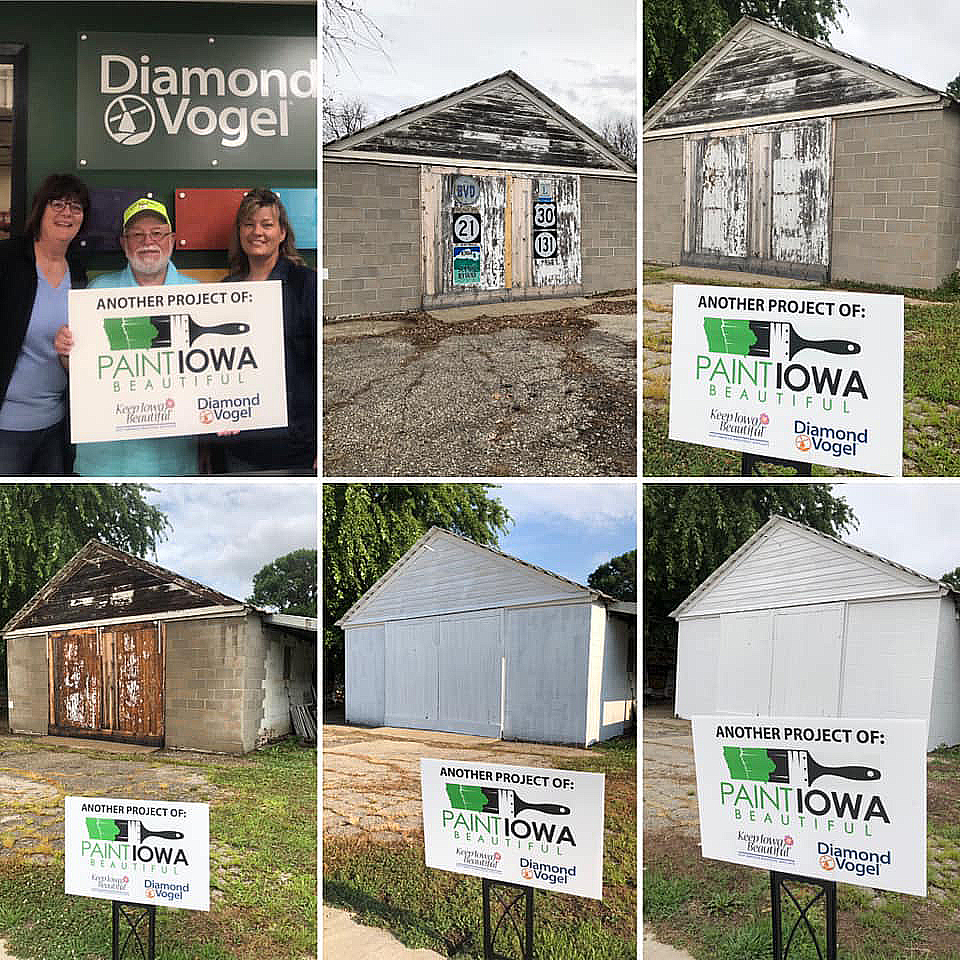
Soon after designation, the grant writing process began. In July 2021, the signs had to come down so that Martin Gardner Architecture could begin preparing a Master Stabilization and Rehabilitation Plan to preserve and restore the property properly.  In that same year, a grant was secured from the Benton County Community Foundation (of Northeast Iowa) for funds to hire Wadsworth Construction to access, stabilize, repair, and restore seven original garage windows. A grant for paint to paint the garage was obtained from Paint Iowa Beautiful. Other grants received to date include $5,000 from the Lincoln Highway Endowment, $10,000 from the Mansfield Charitable Foundation, and $10,000 from the MidWestOne Foundation.

The Master Plan includes looking at structural issues first at an estimated $150,000. The cost to restore the motel is estimated at $116,000 and the station, which includes the reconstruction of the front canopy, is expected to be $180,000. A two-room cabin is estimated at $69,500 for restoration and the Garage Museum comes in at $57,000.  

Restoration efforts thanks to a Paint Iowa Beautiful grant.

At an estimated total cost of $500,000, there is still a long road ahead before restoration will be complete for the future generations of Prestons, Belle Plaine, and Lincoln Highway enthusiasts. The storytelling that George H began and the legacy he created will continue to live on in the telling of stories and the artifacts left behind.

If you would like to contribute to the restoration efforts of the Preston Historic District or if you know of grant opportunities that are a good fit, visit Preston’s Station’s website or send your donations and ideas to Preston’s Station Historic District at 402 13th St, Belle Plaine, IA 52208.

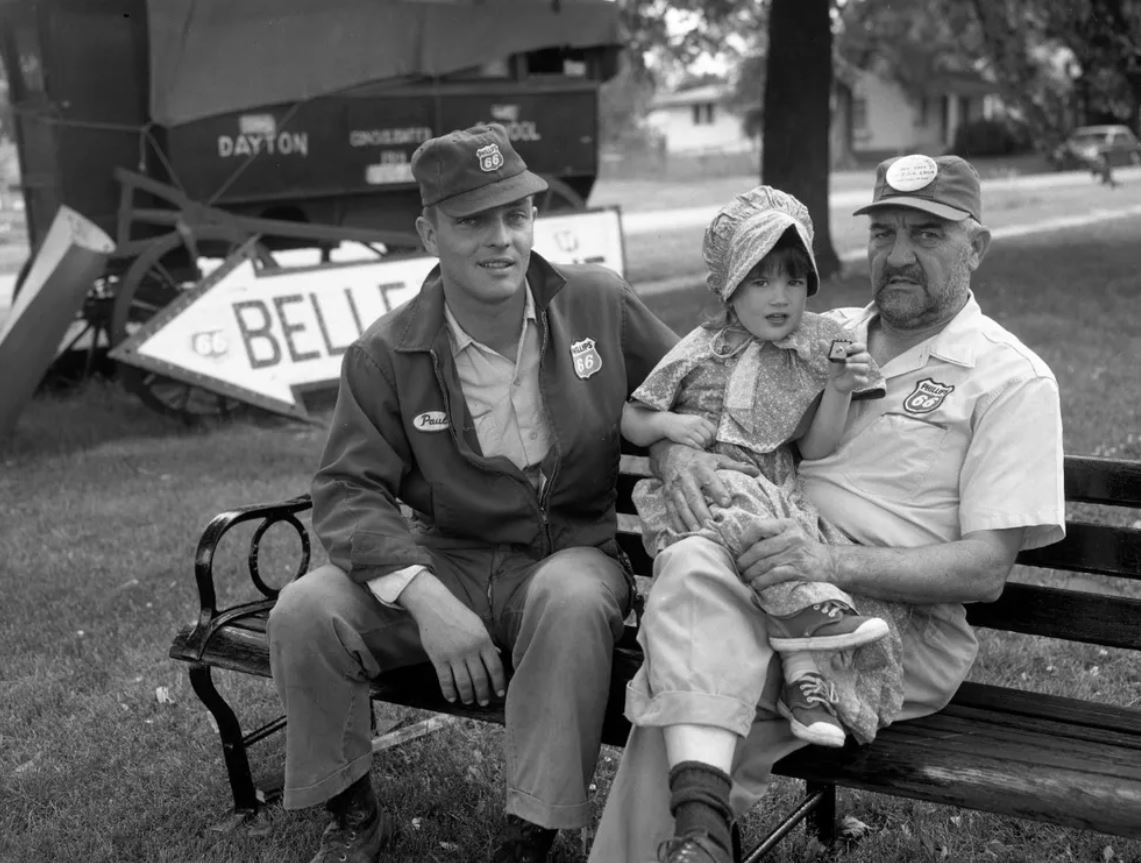
Paul, Mary Helen, and George H. Preston.

A young Mary Helen Preston sitting on Grandpa George’s lap along with Paul Keisel.

Editor’s Note: Preston’s Station District is located near one of the intersections where both of the state byways that Prairie Rivers of Iowa manage for the Iowa Department of Transportation — the Lincoln Highway Heritage Byway and the Iowa Valley Scenic Byway

Many thanks to Preston’s Station Historic District for providing photos and information that contributed to this article.

110 Years of the Lincoln Highway

110 Years of the Lincoln Highway

From Its Beginnings to Where We Are Today

The Idea
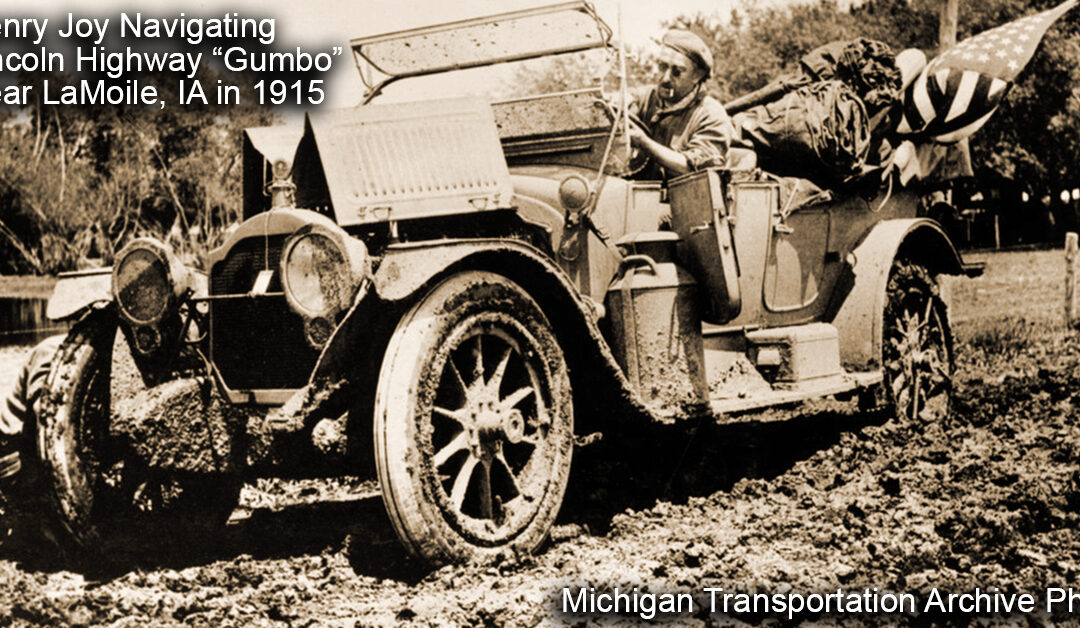
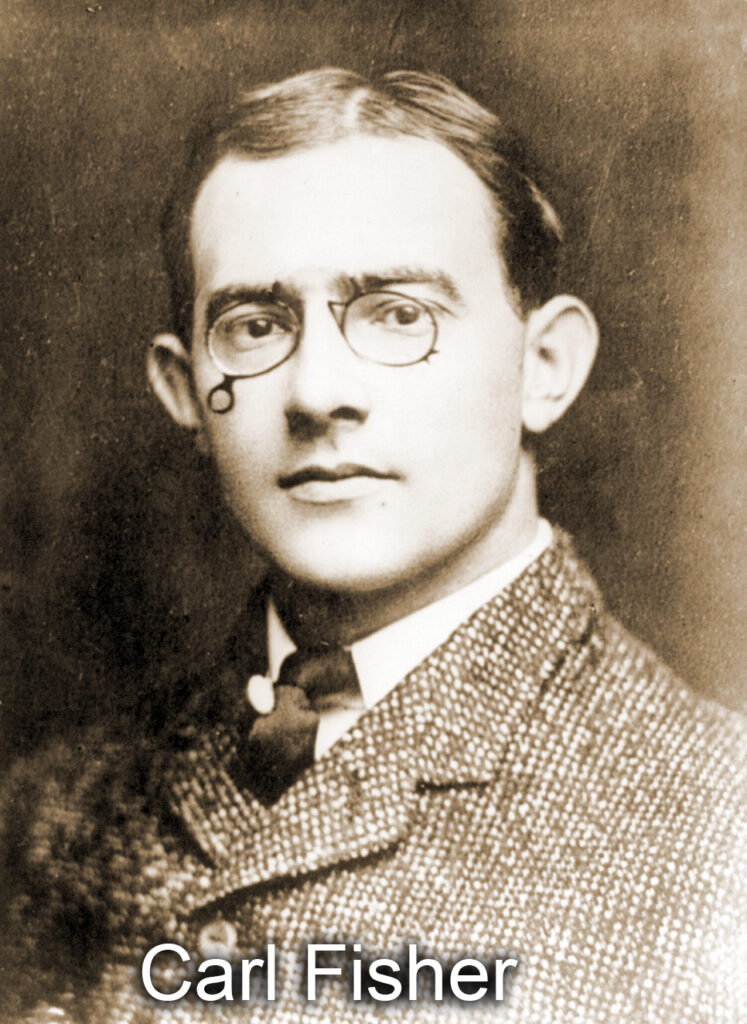
The idea was simple yet big. Carl Fisher wanted to gravel 3,400 miles of road across the US.  He planned to use communities to provide the equipment and manpower and in exchange for the work, the communities would receive the material free of charge. To fund the estimated $10 million for materials, Fisher appealed to auto manufacturers and parts companies to donate one percent of their revenues and to sell membership certificates to the public at $5 a person. There was even a timetable for the road to be done by the 1915 Panama-Pacific Exposition so that the host town of San Francisco would be accessible by New York City. Frank Seiberling, founder of Goodyear Tire and Rubber Company, and Henry B. Joy, president of the Packard Motor Car Company, were on board. Joy suggested naming the road after President Abraham Lincoln to gain patriotic support.

The following year on July 1, 1913, the Lincoln Highway Association was officially established and the Coast-to-Coast Rock Highway was given the name: The Lincoln Highway. Joy was the president and Fisher the vice president so it did not appear that it was only one man driving the plan.

Carl Fisher
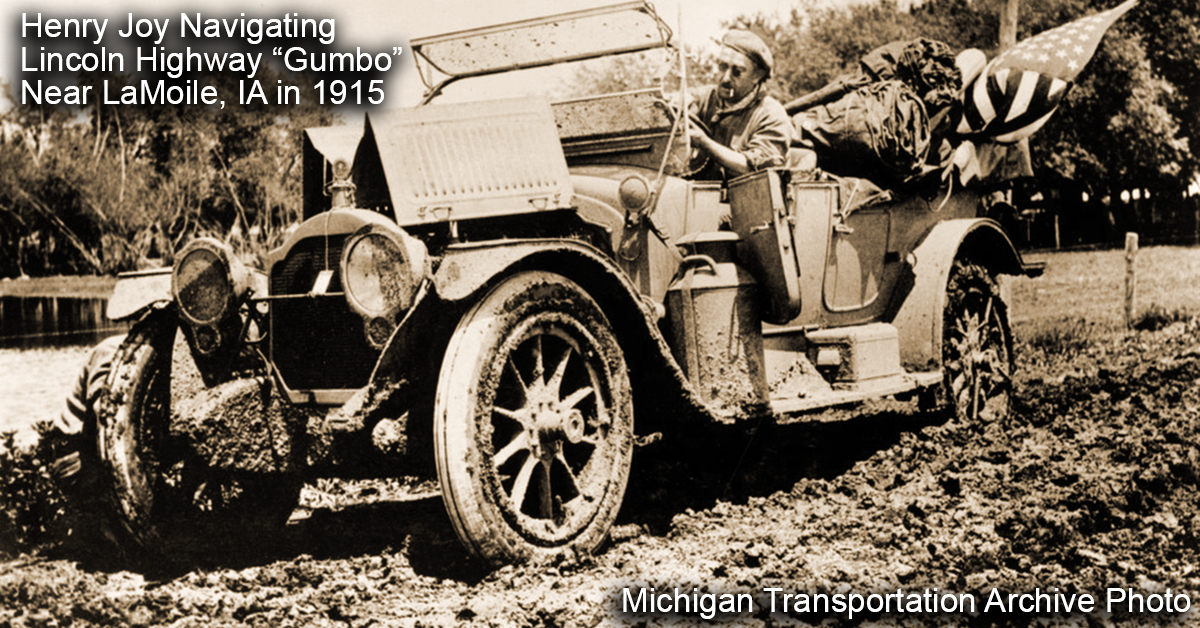
Henry Joy Navigating the Official Packard i "Gumbo" near LaMoille, Iowa

The route would be the fastest and most direct route across the country. The Lincoln Highway Association set up consuls in each state who played a role in defining the precise alignment. The preliminary route was announced on Sept. 14th and the first official “contributor’s ticket” (member card) was issued to President Woodrow Wilson on Sept. 19th. With the route being announced, communities were pulling for their towns not to be left out, so the route was adjusted quickly and often but on Oct. 31st, the official route was dedicated so that celebrations could be had to promote the highway.

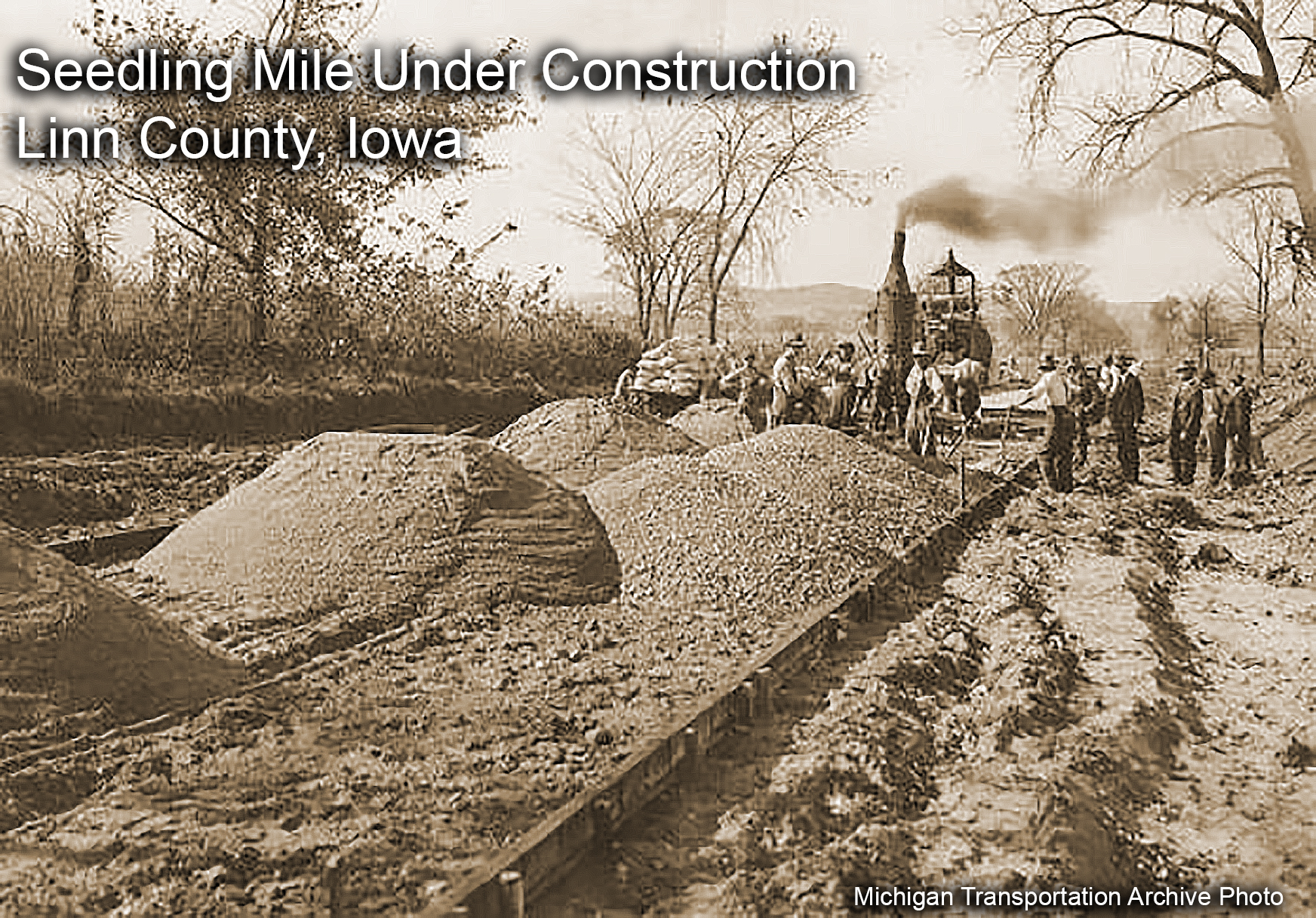
Henry Ford would not give his support for the plan because he believed that the government should build the roads. Support was low without Ford, so Joy and the Association came up with another promotional plan to generate interest by hosting “Seedling Mile” demonstration projects. The Portland Cement Association was pulled in to donate materials for mile-long paved sections of roadway in hopes of getting work to finish the roads. They were strategically placed near enough for communities to access but far enough that the rough roads had to be traversed to reach them. It was also hoped that this scheme would produce government interest in paved roads with the Lincoln Highway as an example. The first seedling mile was paved by October of 1914 west of Malta, Illinois. Iowa’s official seedling mile located between Mt Vernon and Cedar Rapids wasn’t completed until June 1919.

Seedling Mile Under Construction in Linn County, Iowa

Publicity & Branding
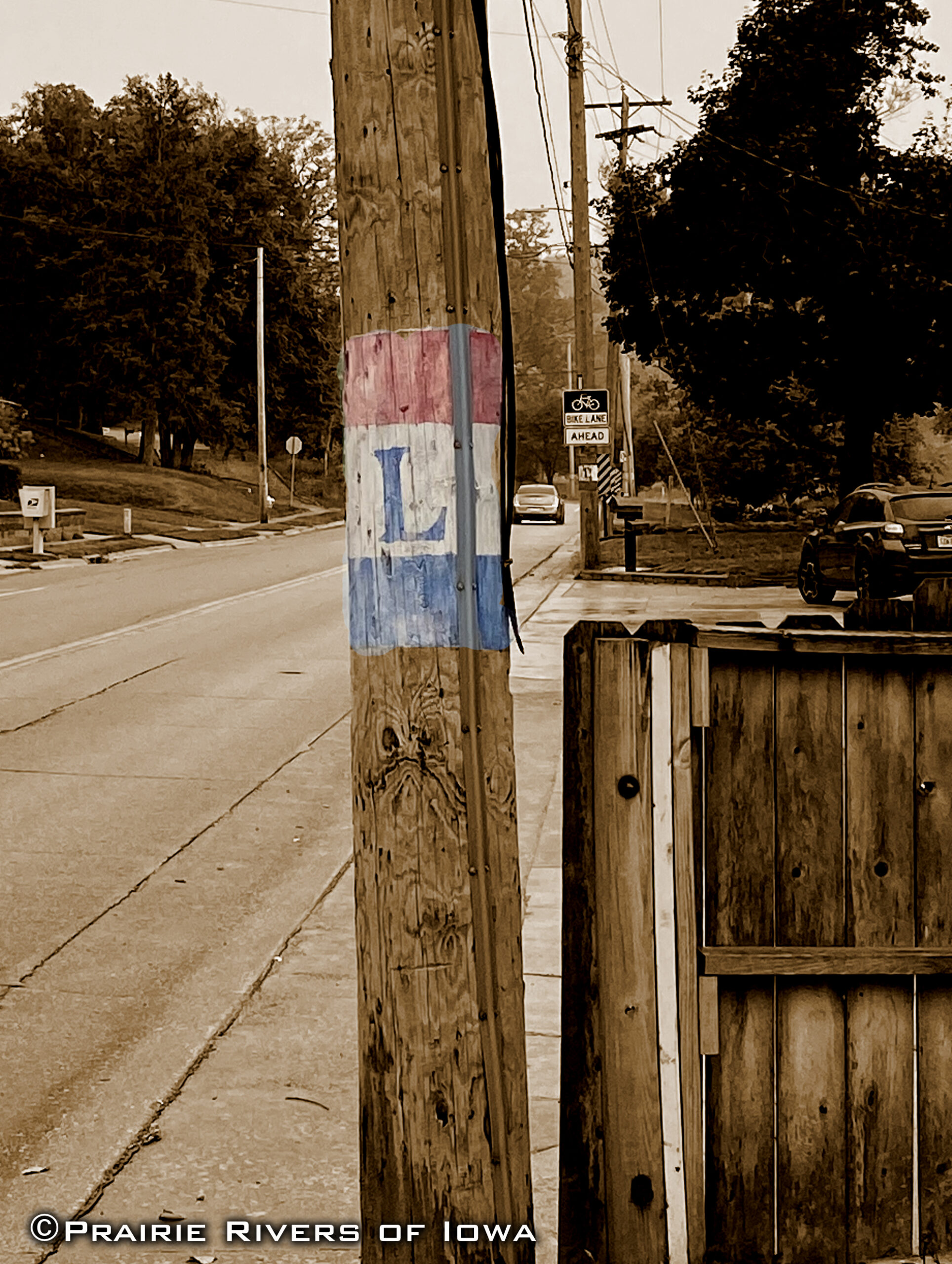
Several celebrities were drawn in to take trips across the Lincoln to advertise the entertainment industry while promoting the highway. To follow the route, the Lincoln Highway’s signature marked the way on telephone poles with the red band on top and blue on the bottom with the letter L in the center. By the 1920’s the telephone poles sported several roadways’ painted colors. Interest was growing in road trips.

In 1919, to test roads and military mobility, a US Army Convoy of 72 vehicles and 297 men traveled across the Lincoln Highway (having joined up in Gettysburg). Among the men on the trip was a young Lt. Col. Dwight Eisenhower who was greatly affected by the arduous trip. This trip was very heavily publicized and after the comments by the men on board, the government had to take notice.

Lincoln Highway Association Telephone Pole Sign
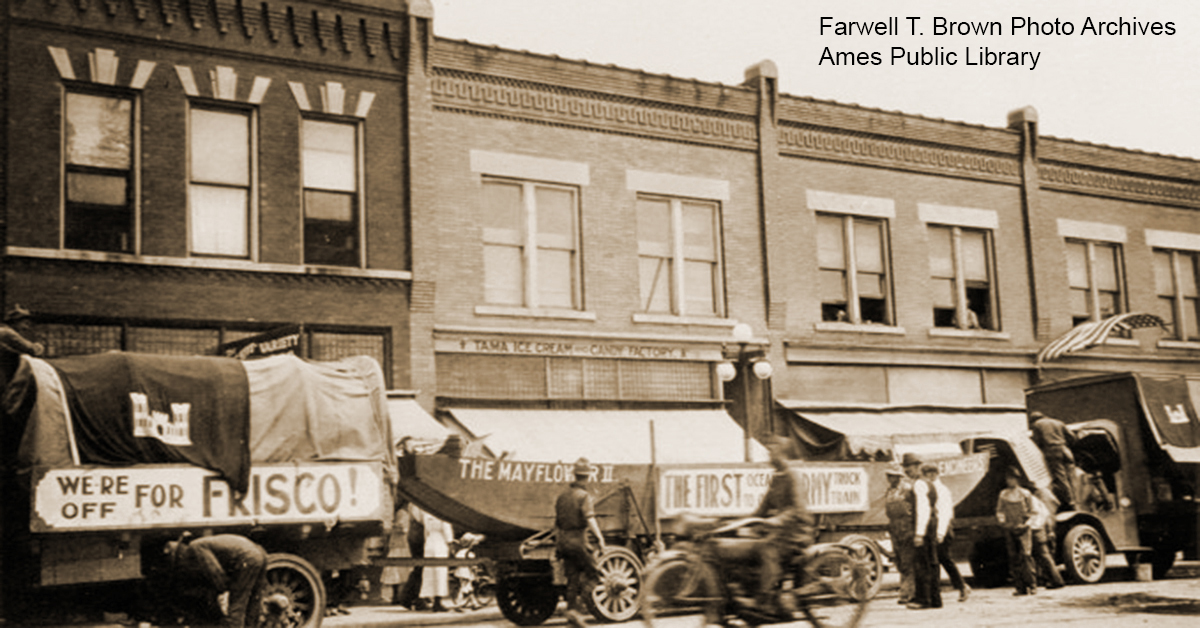
1919 US Army Convoy along Lincoln Highway in Tama, Iowa.

In 1919, to test roads and military mobility, a US Army Convoy of 72 vehicles and 297 men traveled across the Lincoln Highway. Tama, Iowa shown here.

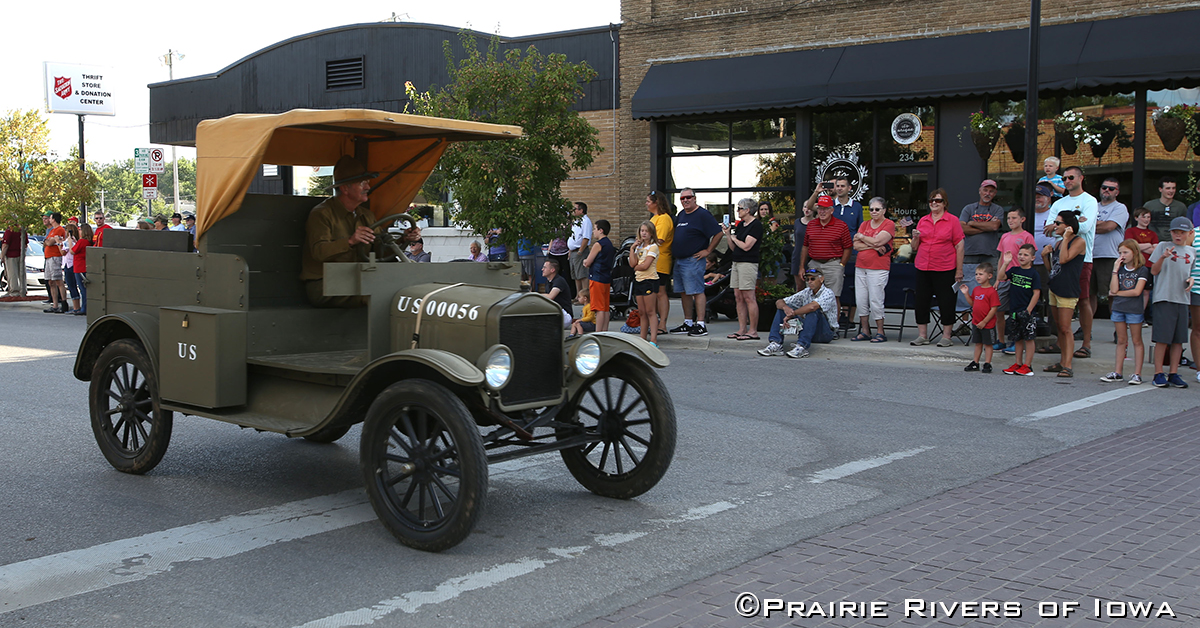
MVPA Following Convoy Route During 2019 Centennial

Military Vehicle Preservation Association 2019 100th Anniversary Transcontinental Motor Convoy on Lincoln Highway Heritage Byway in Iowa.

The Government Gets Involved
The 1920s brought the federal government’s interest in building roads and the creation of numbered U.S. routes. In March 1925, the American Association of State Highway Officials (AASHO) created a federal highway system identifying roadways with the official shield and number. They had now asserted control over the transcontinental route.

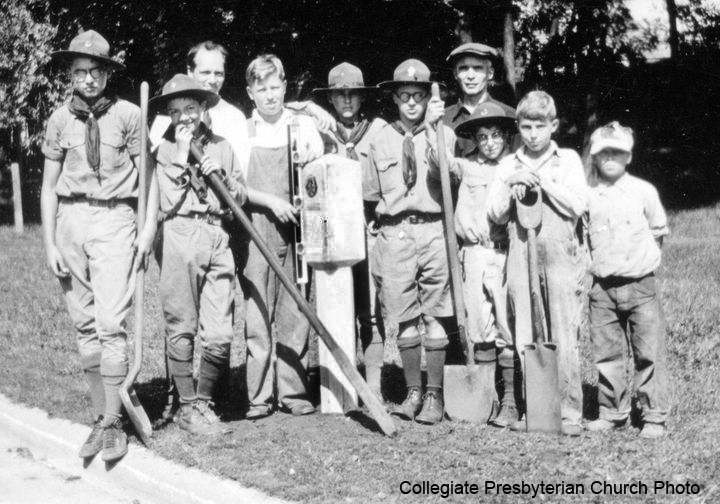
The Lincoln Highway Association was no longer needed and ceased operating on Dec 31, 1927 with 42 miles yet to be improved in politically charged Utah. As their last promotional stunt, they enlisted the Boy Scouts to install nearly 2,400 concrete markers along the Lincoln Highway and 4,000 metal signs in what is rumored to be a one-day installation in 1928.

In 1938, by the 25th Anniversary of the Lincoln Highway, the paving of the roadway in Utah was finally underway. But was it still the Lincoln Highway? Or was it a US highway? Was the Lincoln Highway then ever really completed? Or was it an entirely different highway by then? There is a difference. I will let you enjoy the struggle with the argument.

Lincoln Highway Boy Scout Marker Installation Collegiate Presbyterian Church in Ames, Iowa

The Rebirth
A group of individuals from seven Lincoln Highway states met on Oct 31, 1992, in Ogden, Iowa, to discuss the need “to identify, preserve and improve access to the remaining portions of the LH and its associated history sites.”  They soon formed a revived National Lincoln Highway Association, which today maintains a road map with a 1913 route, 2nd and 3rd generation routes, and auxiliary and detour routes.

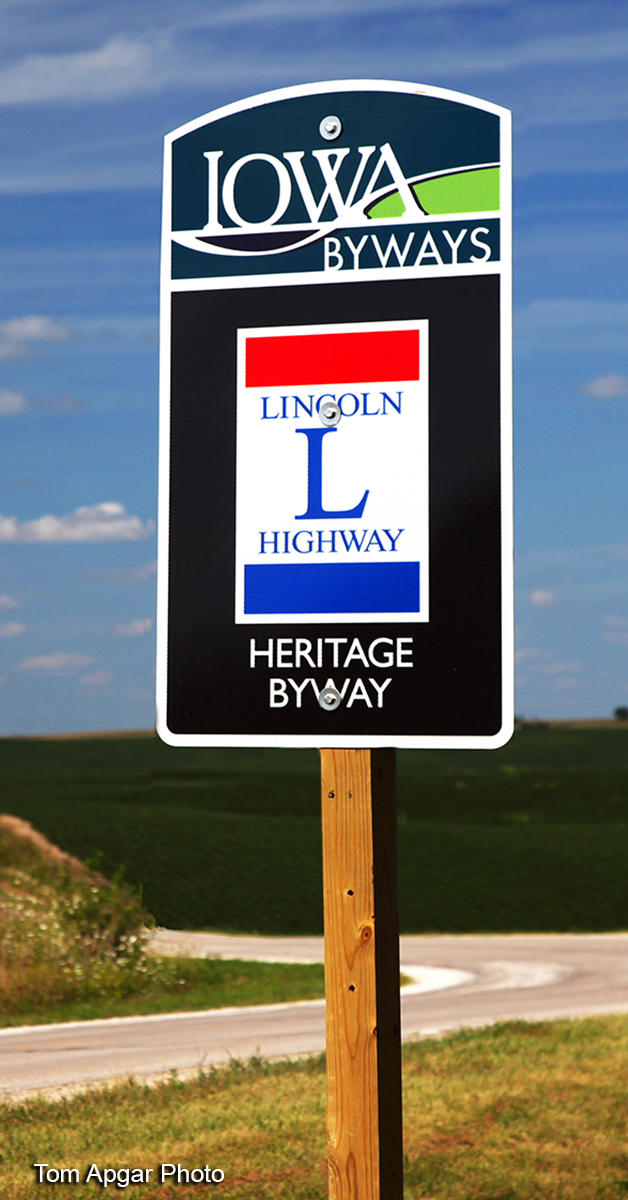
In 2006, the Iowa Chapter of the Lincoln Highway Association, along with community leaders, and the Iowa Department of Transportation (IDOT) designated the entire Iowa route as the Lincoln Highway Heritage Byway. This gave the Lincoln Highway visibility through the use of signage along the roadway and a managing entity (Prairie Rivers of Iowa) that would promote the intrinsic qualities of the historical, cultural, and natural resources of the Byway through education and economic improvements.

In 2021, then coordinator, Jan Gammon, with help from the Iowa Lincoln Highway Association, was able to obtain National Scenic Byway status!

Lincoln Highway National Heritage Byway in Iowa

In Summary
The popularity that the Lincoln Highway experienced in its beginning has not been matched since.  So how can we change the narrative and bring the Lincoln Highway back in people’s mindfulness when we talk about historical roads? At a time when the Lincoln Highway is losing its’ few remaining greatest assets, aging historical structures and bridges, the mindset to value, rehabilitate, and creative reuse is the route to a new narrative for the next 110 years.

So when you see an anniversary date, take a second look. Celebrate it, talk about it, and change the public mindset to value the historical idea. And don’t forget to take a road trip!

Sources
www.fhwa.dot.gov/highwayhistory/lincoln.cfm
www.lincolnhighwayassoc.org/history/
www.iowadot.gov/autotrails/lincolnhighway

Historical Note: Henry Joy wasn’t the first to suggest Lincoln as the name for America’s coast-to-coast highway. Read more here in Brain Butko’s Lincoln Highway News.

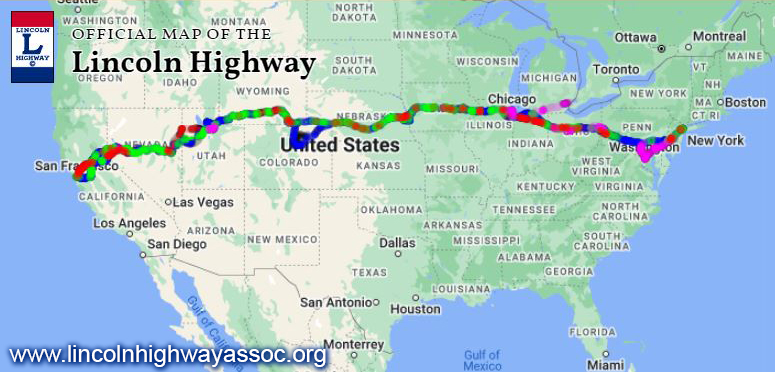
Lincoln Highway Map
Pritchard Companies Traverse the Lincoln Highway Celebrating 110 Years

Pritchard Companies Traverse the Lincoln Highway Celebrating 110 Years

Pritchard Companies Traverse the Lincoln Highway for their Historic Innovation Relay to Celebrate 110 Years

Nineteen hundred and thriteen was the year that Walter Pritchard opened Garner Auto Sales in Garner, Iowa. 110 years later the company is still run by the Pritchard family only on a much larger scale having 350 employees and seven divisions. Now known as the Pritchard Companies, the founding family wanted to make a big gesture to highlight the innovation of the auto industry after such a long history of a single-family business. When the Pritchards found out that the Lincoln Highway was not only the first improved transcontinental roadway across the United States but that the Lincoln Highway Association was also celebrating an 110th anniversary, the idea was set.


Electric Vehicle During Pritchard Companies/Iowa Lincoln Highway 100th Anniversary Relay

Two short months later, on Oct 31st, on a very cold Tuesday morning at sunrise over the Mississippi River, Pritchard family member Angela Pritchard (5th generation), headed west out of Clinton, Iowa driving a Ford Mustang Mach-E (electric vehicle) on her way across the Lincoln Highway. Before she took to the road, the city of Clinton presented her with a flag to the city.  In the days leading up to the drive, Bill Pritchard (3rd generation) had previously handed off the baton for the relay in a dramatic gesture captured here from his antique Model-T Ford (the original dealership car of 1913).

Clinton Iowa Sunrise During 110th Anniversary Relay
EV Vehicle Charging During 110th Anniversary Relay

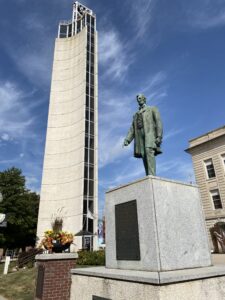
A few hours later Angela arrived in Cedar Rapids to a news crew and was interviewed by KGAN, a CBS affiliate. Angela handed the baton to CEO Joe Pritchard (4th generation), and along with Pam they took off on the second leg of the relay in a Ford F-150 Lightning (Ford’s electric truck). Ames was the lunch stop where the Pritchards handed the baton to an “extended family member,” employee Brock Thompson. Brock drove a Chevy Bolt EUV to Jefferson where the caravan greeted the statue of Abraham Lincoln before heading on to Carroll. As most central Iowans know, the figure is a long-standing homage to the Lincoln Highway’s namesake.  In Carroll, the baton was given to the newest Pritchard family employee Matt Bradley. Matt brought the Lincoln Highway idea to the Pritchards.

He was honored with driving the Chrysler Pacifica Hybrid on the final journey through western Iowa where the EV infrastructure is just getting started. Shortly after sunset, twelve hours after the relay started, , the Missouri River was reached by taking the 3rd generation Lincoln Highway route from the town of Missouri Valley.

As the Lincoln Highway Heritage Byway coordinator here at Prairie Rivers of Iowa, I would like to express our gratitude for the inclusion of the Lincoln Highway in such an iconic drive. We are thankful for your choice to use the Iowa Lincoln Highway route for your 110th Anniversary Innovation Relay and for the attention you brought to the 110th anniversary of the Lincoln Highway Association’s official dedication date for the Lincoln Highway route.

The Pritchard CompaniesHistoric Innovation Relay drive was a success and a milestone. We can’t wait for the next celebratory drive.

Pritchard Companies Historic 110th Anniversary Innovation Relay
Top 11 Haunts Along the Lincoln Highway Heritage Byway

Top 11 Haunts Along the Lincoln Highway Heritage Byway

Our Lincoln Highway Heritage Byway coordinator’s top 11 choices for haunts along or near the Lincoln Highway in Iowa:

#11) Marsh Rainbow Arch Bridge is just south of Lake City (14 miles north of the Lincoln Highway at Glidden). This haunted bridge has a ghost after my own heart. It is said that if you visit this bridge at night and leave a candy bar (particularly chocolate) on the road, that the chocolate will be gone the next day but the wrapper will still be completely intact and unopened. Once I am gone, please leave Reese’s Peanut butter cups, and I will come visit!

Haunted Marsh Rainbow Arch Bridge

#10) The Boone News Republican Building, Downtown Boone
Workers at night would hear footsteps running on stairs or hear their name called when the place was empty. The historic building was to be renovated and made into apartments in the fall of 2023.

Haunted Boone Times Republican Building

#9) Riverside Cemetery, Marshalltown
There is a concrete chair in the cemetery that looks like wood. If you dare to sit upon it, you will have bad luck or even die within the year.

haunted Cursed Chair

#8) Coe College, Cedar Rapids
Getting a good night’s sleep at this college has been challenging for some due to a ghost’s midnight antics. Helen, who was a victim of the influenza outbreak of 1918, is said to haunt the campus. She likes to come out at night and play piano in the parlor or take the covers off of students while they are sleeping.

Haunted Coe College

#7) Granger House, Marion
It has been said that the white figure of a young woman can be seen sitting in front of a window at midnight.

Haunted Granger House in Marion Iowa

wdd#6) Periwinkle Place Manor, Chelsea
The 3-story, 9-bedroom inn occupies a former funeral home that operated from 1892-2003. Now, the manor is a bed and breakfast that hosts events such as murder mystery dinners, weddings, concerts, wine tasting, and of course ghost hunters.

Haunted Periwinkle Bed and Breakfast

#5) Farrar Elementary Schoolhouse, Maxwell
(approximately 17 miles south of Lincoln Highway) Jim and Nancy Oliver purchased the abandoned schoolhouse in 2006, in hopes of making it their home. While working on the soon-to-be home, Nancy, after becoming unbalanced on the stairs, felt someone helping her. She assumed it was her husband. She turned only to see a small boy standing on the step, only to disappear a full two seconds later. Visited by dozens of paranormal groups and individuals.

Haunted Farrar Elementary Schoolhouse

#4) Black Angel Statue, Fairview Cemetery, Council Bluffs.
Built as a memorial to General Dodge’s wife, Anne, the statue’s eyes follow those who look upon her. Many people believe that those who touch the sculpture may be cursed. Others have said that the angel flies off the pedestal at night. Other haunted locations in the area include General Dodge’s House, the Lewis and Clark Monument, and the old library that is now the Union Pacific Museum.

Haunted Black Angel in Fairview Cemetery

#3) Farm House Museum at Iowa State University. The Farm House is believed to be haunted by two women, Edith Curtiss and Esther Wilson. It is thought that Edith Curtiss will open closed curtains on the second floor every night while the house is locked up. Every morning the curtains will be open even if they were held by safety pins. Esther will turn flatware to a 45-degree angle; the curators have since sewn down the silverware to the tablecloths so that they cannot be moved. Many other locations on the campus are also haunted, including Shattuck Theater, C.Y. Stephens Auditorium, the Gold Star Hall, and several dorm buildings.

Haunted Farm House Museum at ISU

#2) Squirrel Cage Jail, Council Bluffs
This one-of-a-kind, three-story jail was in use from 1885-1969. One of eighteen revolving jails in the US, the floors were divided into dark and damp pie-shaped cells that were extremely small. The jail is said to be haunted by former jailers, the original construction supervisor, a woman, and even a little girl and two ghost cats.

Haunted Pottawattamie Squirrel Cage Jail<br />
Council Bluffs, Iowa

#1) The Black Angel Monument, Oakland Cemetery, Iowa City
Angels in cemeteries are almost always positioned looking upward as if toward heaven; however, the angel monument at Oakland Cemetery in Iowa City was created with the face looking downward and the wings poised over the graves below. Since the eight-and-a-half-foot-tall burial monument was erected over 85 years ago, it has been the subject of many stories and legends. A once golden or perhaps ivory color, the monument is now completely black and has gained the reputation that kissing, touching, defiling, or even staring at the angel too long will bring about a terrible accident, disease, miscarriage, or death. Even so, the angel attracts thrill seekers who can’t help but tempt fate and the Angel of Death.

The Black Angel Monument, Oakland Cemetery