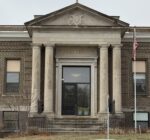
Carnegie Libraries byways Tour:  Cornell & Mt Vernon

Carnegie Libraries byways Tour: Cornell & Mt Vernon

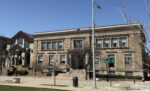
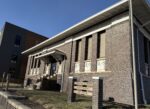
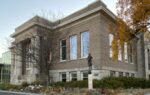
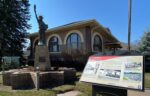
Cornell College & Mount Vernon Public Library

In 1903, Cornell College and the City of Mount Vernon received a grant offer from Andrew Carnegie which allowed for the building of a library. This collaboration between a private college and a community to share a library is possibly the only one in the country. Although the library outgrew itself, the collaboration did not.


Securing the Grant

Recognizing the value of Carnegie’s library program, Senator William B. Allison and Governor Leslie M. Shaw used their influence to help Cornell College and Mount Vernon obtain a $40,000 grant offer in 1901 for a joint library. By 1903, the contract among the college, the city, and Carnegie was finalized, though it required several legal and administrative steps:

  • Ownership and control: Cornell College agreed to provide the land and required a two‑thirds majority on the library board.
  • Carnegie’s conditions: Carnegie insisted that annual maintenance—estimated at $4,000—be guaranteed. Mount Vernon would contribute $500 through taxation, and the college would supply the remainder.
  • State legislation: Iowa’s library law had to be amended to allow joint ownership and governance between a city and a private college. The Thirtieth General Assembly enacted the necessary changes.

A community fundraising effort in 1928 later created a maintenance endowment, with contributions from local donors, Carnegie himself, and the Rockefeller Foundation.

Designing and Constructing the Building

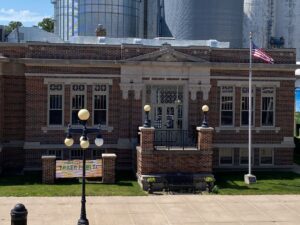
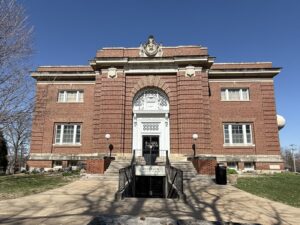
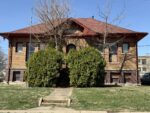
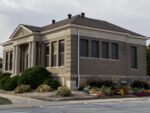
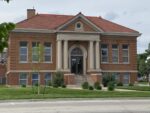
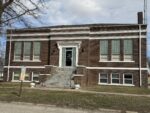
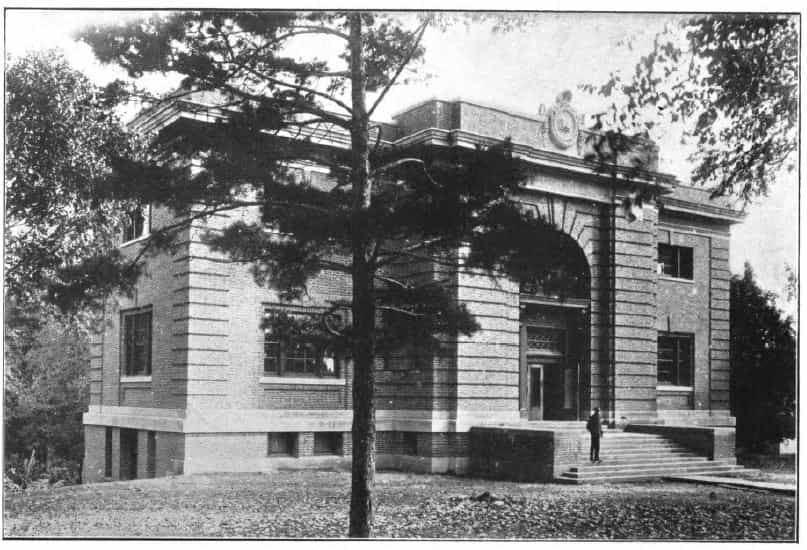
The architectural firm Shepley, Rutan & Coolidge of Boston and Chicago designed the new library, while Bartlett & Kling of Cedar Rapids served as contractors. The building featured a Neo‑Classical design with red brick, two main floors, and a basement. A north-side stack addition included iron-and-glass floors installed in 7’8” sections as funds allowed, and a spiral iron staircase connected all levels, including an exterior access point.

Carnegie Cornell

Because the library was built on a hillside, extensive foundation work was required, leading to cost reductions elsewhere in the design. At one point, the architects consulted the Olmsted Brothers regarding the placement of a memorial fountain—an intriguing connection to the firm’s broader landscape work on the Cornell campus. Whether the fountain was ever constructed remains unclear.

The building’s inscriptions were originally planned as:

  • Main cornice: “Library Building”
  • Entrance panel: “The Gift of Andrew Carnegie”

Cornerstone and Opening

Cornell College scheduled a cornerstone ceremony for June 14, 1904, even before the architectural drawings were complete. A special contract allowed construction of a foundation platform solely for the event. A 12-inch copper box containing documents was placed inside the cornerstone.

The library opened in September 1905 with 26,000 volumes under the supervision of librarian May L. Fairbanks. Mount Vernon, which had no public library of its own, gained full access to the college’s collection.

Although the 1903 contract established the building, no subsequent legal agreement defined the ongoing relationship between the Cornell College Library and the Mount Vernon Public Library. For decades, the arrangement functioned informally as a “gentleman’s agreement.”

When Cornell College opened a new library building in 2001, the Mount Vernon City Council passed an ordinance officially designating the Cole Library as the community’s public library. Today, the Russell D. Cole Library houses both the Cornell College Library and the Mount Vernon Public Library. Each maintains its own identity and website, but all materials are available to all users. To local knowledge, no other private college and municipality in the nation share a library in this way.

Later Use of the Carnegie Building

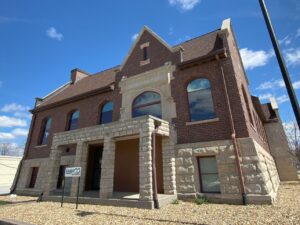
The original Carnegie Library was eventually repurposed as the Norton Geology Building, and its inscriptions were removed. The Cornell College Historic District was listed on the National Register of Historic Places in 1980, making Cornell one of only two colleges in the country with this distinction.

As you drive the Lincoln Highway Heritage Byway through the National Historic District, slow down and take note of the buildings on both sides of the road and explore the College Campus, it is a beauty.

See you on the byway!

Lincoln Highway Heritage Byway A National Scenic Byway Logo

As always, thank you to the Carnegie Libraires in Iowa Project for the work they have provided and photographs. Thank you to the Cole Mount Vernon Public Library and the Lisbon Historic Preservation Commission and Visit Mount Vernon- Lisbon for information and photos.

Byway Carnegie Libraries to receive $10,000 Gifts

Byway Carnegie Libraries to receive $10,000 Gifts

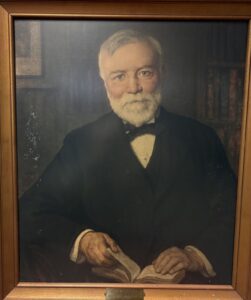
Andrew Carnegie Library Painting

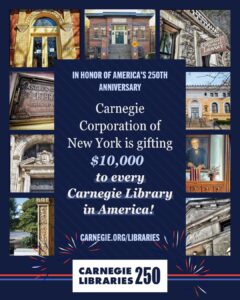
In October of this year, Carnegie Libraries across the nation received an email alerting them to a gift no one was expecting. The Carnegie Corporation of New York (originally the Carnegie Foundation) stated on their website that Carnegie Libraries will each receive a $10,000 gift to commemorate the 250th anniversary of the signing of the Declaration of Independence. To qualify, libraries must have been originally funded by the Andrew Carnegie Foundation, remain operational, and acknowledge their Carnegie heritage. Cedar Rapids is an example. Cedar Rapids, for example, continues to honor its Carnegie connection, even though its Carnegie building is now a part of the Cedar Rapids Museum of Art. Gift recipients may use the funds however they wish to celebrate the 250th anniversary, thereby advancing their mission and benefiting their communities (Carnegie C of NY press release).

Carnegie Libraries to receive $10,000 gift

Between 1892 and 1917, fifteen Public Carnegie Libraries and one Academic Carnegie Library were located and built along the Lincoln Highway in Iowa. Many of these libraries were built in towns along the Lincoln Highway because they linked communities and gave Carnegie’s libraries even greater visibility and accessibility. In western Iowa, a line can connect the dots where a Carnegie Library can be found in Denison, in Dunlap, in Logan, in Woodbine, and in Missouri Valley.

In exchange for the free grant to build a library, the communities receiving the grants needed to obtain property, city support, an architect, a builder, and the books to fill their library. It was often women’s groups or single librarians who applied for the grants and who were tasked with getting city support for the endeavor.

Of Iowa’s 108 Carnegie libraries, 52 are still in use as libraries today, 46 exist but are no longer libraries and 10 no longer exist. Of the Lincoln Highway’s 16 libraries built, 7 are still used as libraries: Clinton Public Library,  Ames Public Library, Jefferson Iowa Public Library, Norelius Public Library (Denison), Logan Public Library, Woodbine Carnegie Library, and Missouri Valley Public Library.  


Traer Carnegie Library
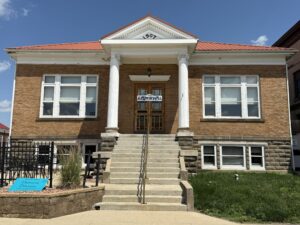
Marengo Carnegie Library

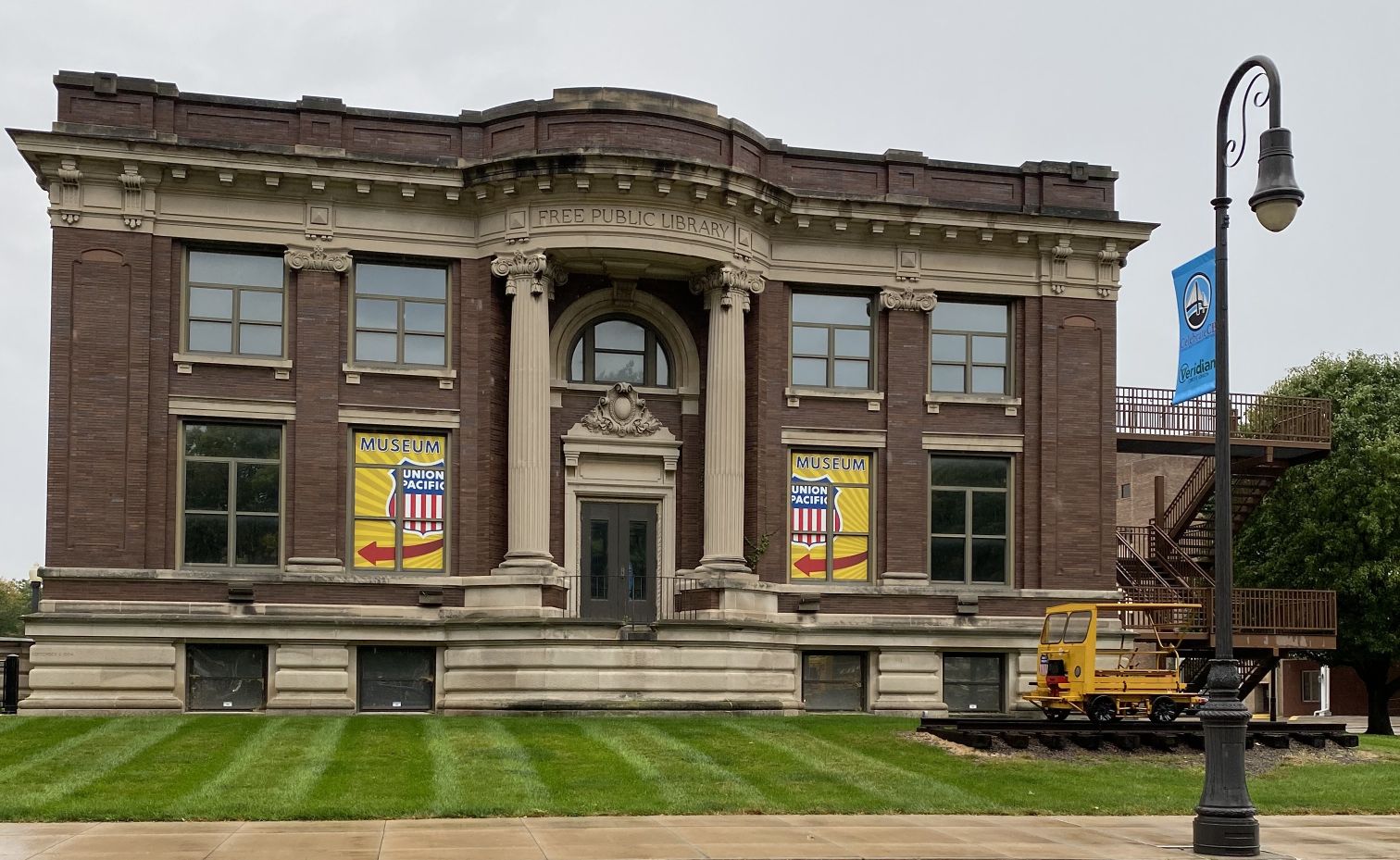
All Lincoln Highway Carnegie buildings still exist although the remaining 9 outgrew their buildings and built new libraries as opposed to building additions. Carroll, Cedar Rapids, and Council Bluffs are museums, Marion and Dunlap are used by churches, DeWitt is a restaurant (The Old Library), Marshalltown is a government building, Tama is privately owned, and Cornell in Mount Vernon is the Norton Geology Center and Anderson Museum (academic and public shared). Iowa Valley Carnegie libraries include Marengo and Traer (audio tour); both remain operational as libraries.

Cornell Carnegie Library
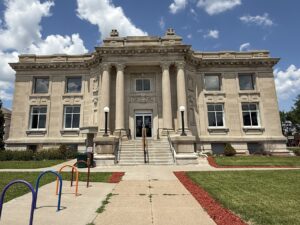
DeWitt Carnegie Library
Clinton Carnegie Library
Council Bluffs Carnegie Library

Byway Carnegie Libraries who have announced on Facebook that they are accepting the gift include Traer (Iowa Valley), Clinton, Carroll, Logan, and Woodbine. The libraries are asking their patrons to share stories about their library and submit photos for possible inclusion on carnegielibraries.org.  The site is part of Carnegie Libraries Across America,  a resource that enables visitors to learn about each building. Iowa has a similar program, Carnegie Libraries in Iowa Project. Reach out to your local library to find out how to submit your stories.

For more information on Andrew Carnegie’s library legacy, check out a timeline and a video posted by the Carnegie Corporation of New York. Stay informed by signing up for the foundation’s Unstacked newsletter.

Missouri Valley Carnegie Library
Logan Carnegie Library
Denison Carnegie Library
Marshalltown Carnegie Library
Tama Carnegie Library
Jefferson Carnegie Library
Marion Carnegie Library
Dunlap Carnegie Library
Cedar Rapids Carnegie Library
Carroll Carnegie Library
Ames Carnegie Library
Woodbine Carnegie Library

Wherever you are on the Lincoln Highway Heritage Byway, you are near an Andrew Carnegie historic library building. With Iowa’s library open access program, you can check out more than just the history. Follow me on the byway as we explore the 16 Carnegie Libraries of the Iowa Lincoln Highway Heritage Byway and the two along the Iowa Valley Scenic Byway.

Until next month…see you on the byway!

–Jeanie

Lincoln Highway Heritage Byway A National Scenic Byway Logo
Iowa Valley Scenic Byway Iowa Prairie Rivers of Iowa
PRI square logo